

Nine tool categories make up the modern AI amplification stack: generative creation, SEO/optimization, social listening, predictive analytics, distribution/orchestration, paid amplification, personalization, measurement/attribution, and conversational engagement. Each of these solves a different bottleneck in getting content seen.
- Generative AI — drafts copy, images, and video variants fast
- SEO/optimization platforms — prepare content to rank in search and AI answer engines
- Social listening tools — flag what's trending before a competitor notices
- Predictive analytics — forecast the best time and format to publish
- Distribution/orchestration platforms — push one asset across a dozen channels
- Paid amplification tools — optimize ad spend behind organic content
- Personalization engines — match content to the visitor viewing it
- Measurement/attribution platforms — show which channel actually drove the result
- Conversational/engagement AI — turn amplified traffic into qualified leads
Most marketing teams don't need all nine.
Table of Contents
- What Is AI-Driven Content Amplification?
- 1. Generative AI for Rapid Content Production
- 2. SEO and Content-Optimization Platforms
- 3. Social Listening and Sentiment Analysis Tools
- 4. Predictive Analytics and Forecasting Tools
- 5. Distribution and Orchestration Platforms
- 6. Paid Amplification and AI Ad Optimizers
- 7. Personalization and Recommendation Engines
- 8. Measurement and Attribution Platforms
- 9. Conversational and Engagement AI
- How to Combine These Tools Into One Workflow
- How to Choose the Right Tools for Your Team
- Why Most Teams Overbuild Their AI Stack
- A Managed Alternative to Building Your Own Stack
- Sources
- FAQ
What Is AI-Driven Content Amplification?
AI-driven content amplification uses machine learning, natural language processing, and generative models to select, adapt, distribute, and measure content across channels, rather than relying on manual scheduling and gut-feel promotion. Instead of a person deciding which blog post to boost on social or when to run a paid push, software analyzes engagement patterns and makes (or suggests) that call in real time.
The technology stack behind this typically blends ML, NLP, generative AI, and predictive analytics into a single workflow, covering everything from first-draft research to near real-time performance tracking. Three benefits show up consistently:
- Speed and scale — a task that took a content team a week now takes a day
- Better targeting — content adapts to audience segments instead of a one-size-fits-all approach
- Data-driven optimization — decisions rely on engagement data, not intuition
HubSpot's 2025 State of AI survey found content creation is the single most popular marketer use case for AI, with 55% of marketers using it to create content and 47% using it for research. Track click-through rate, share rate, earned reach, and conversion lift to know if amplification is actually working, not just producing more output.
One caution: automation without editorial checkpoints erodes trust fast. Every asset that leaves an AI pipeline still needs a human reviewing tone, accuracy, and brand fit before it goes live.
1. Generative AI for Rapid Content Production
Generative tools draft blog posts, ad copy, social captions, image concepts, and short-form video scripts in minutes instead of hours. Large language models handle text; image and video generators handle visual variants for A/B testing across paid and organic channels. The speed gain is real, and it's why content creation ranks as the top AI use case among marketers today, according to HubSpot's research cited above.
Use generative AI for:
- Ideation and outline generation before a writer starts
- First drafts that a human then edits and fact-checks
- Producing multiple creative variants for split testing
- Repurposing one long article into a dozen social snippets
The catch is real and well documented. Generative systems hallucinate facts, drift from brand voice over long sessions, and produce generic phrasing when prompts are vague. A 2026 review of generative AI's impact on business content strategies makes the point plainly: speed and personalization gains only hold up when paired with human oversight, clear editorial standards, and honest disclosure about AI involvement. Skip that oversight and you end up publishing confident nonsense at scale, which is worse than publishing nothing.
Pro Tip: Build a reusable prompt template that locks in your brand voice, target reading level, and required facts before generating anything. A generic prompt produces generic output every single time.
Generative AI works best as the first stage of a pipeline, not the final gate. Treat it like a fast intern who needs a second set of eyes on every draft, and it will pay for itself in hours saved.
2. SEO and Content-Optimization Platforms
Optimization platforms analyze search intent, competitor content, and on-page structure, then recommend edits that help an article rank and get surfaced by AI answer engines. Core functions include keyword and intent mapping, on-page scoring, internal linking suggestions, and schema markup recommendations. As AI search grows, these platforms increasingly factor in Generative Engine Optimization (GEO) and Answer Engine Optimization (AEO) signals, not just traditional keyword density.
What these platforms typically evaluate:
- Search intent alignment and topic coverage gaps
- Content structure (headings, length, readability) against top-ranking pages
- Schema and structured data recommendations
- Entity and citation patterns that AI models tend to favor when generating answers
Pick a dedicated optimization platform when you're publishing at volume, more than a few pieces a week, and need consistent scoring across writers. A solo consultant publishing monthly can usually handle manual SEO with a checklist instead.
Integration matters here. Look for a CMS plugin or browser extension that fits your existing workflow, plus an analytics export so optimization scores connect back to actual traffic and conversion data. The tools worth evaluating fall into two buckets: content graders that score a draft against ranking pages, and topic-modeling engines that map full content clusters for a domain. Understanding how AI search discovery actually works helps you judge whether a given platform's recommendations are chasing outdated keyword logic or genuinely accounting for how answer engines pull and cite content today.
3. Social Listening and Sentiment Analysis Tools
Social listening tools scan platforms, forums, and news in real time to detect spikes in mentions, sentiment shifts, and emerging topics before they peak. That timing edge is the entire value proposition. Amplifying a post while a topic is climbing gets exponentially more reach than boosting the same post a week after interest fades.
The tactical sequence looks like this:
- Detect a trending topic or sentiment spike tied to your brand or industry
- Draft a quick reactive piece or repurpose an existing asset to fit the moment
- Push it through owned channels first, then add paid spend if early engagement is strong
A regional service business noticed listening data flagging a sudden spike in local search interest around a seasonal topic. The team repurposed an existing blog post into a short video within a day and boosted it with a small paid budget while interest was still climbing, catching engagement a delayed response would have missed entirely.
Signal-to-noise ratio is the real limitation. Cast too wide a net and you drown in irrelevant mentions; too narrow, and you miss the trend until it's stale. Platform coverage and check-in cadence, hourly versus daily, both need to match how fast your industry actually moves.
4. Predictive Analytics and Forecasting Tools
Predictive models estimate topic momentum, likely reach, and the best posting windows before you spend a dollar or an hour on distribution. Instead of guessing whether Tuesday morning or Thursday afternoon works better, the model scores historical engagement patterns and tells you.
These tools generally forecast:
- Which existing topics still have momentum worth riding
- Expected reach for a given format (video versus static image versus text post)
- Optimal timing windows by channel and audience segment
Predictive systems are only as good as the data feeding them. Feed a model six months of inconsistent posting and inconsistent tagging, and its forecasts will be inconsistent too. Validate predictions against actual outcomes for a few cycles before trusting the model to drive budget decisions unsupervised.
Recommendation engines built on this data can forecast content performance and suggest the best formats and posting times well enough that teams increasingly use forecasts to decide which piece of content gets the paid push and which one waits. That shift, from scheduling by habit to scheduling by forecast, is one of the quieter but more durable gains AI brings to a content calendar.

5. Distribution and Orchestration Platforms
Distribution platforms take one piece of content and adapt it into formats for social, email, syndication networks, and paid channels, then publish from a single dashboard instead of ten separate logins. This is a different job than a basic scheduler. Orchestration software adapts the asset itself, resizing video for Stories, trimming a long-form article into a LinkedIn carousel, converting a podcast clip into captioned social video, before it ever gets scheduled.
Choose an orchestration platform over a simple scheduler when:
- You're publishing across five or more channels regularly
- The same core asset needs multiple format variants, not just multiple post times
- You need paid connectors built in, not a separate ad tool bolted on afterward
The category itself splits into social-first schedulers, email-first tools, syndication networks, and full enterprise orchestration platforms, with pricing and feature depth scaling accordingly. A single blog post can become a newsletter section, three social captions, a short video script, and a paid ad variant, all from the same source file, if the platform supports asset adaptation rather than just scheduling. Check that it connects to your asset management system and CMS before committing; a distribution tool that lives in isolation from your content library creates more manual work, not less. This kind of content repurposing is where distribution platforms earn their subscription cost fastest.
6. Paid Amplification and AI Ad Optimizers
Paid amplification tools manage the budget side of getting content seen: automated bidding, creative variant testing, audience expansion, and predictive bid strategies that adjust spend in real time based on early performance signals. This is where organic content gets a guaranteed push instead of hoping the algorithm cooperates.
Core functions to expect:
- Automated bid management that shifts spend toward better-performing variants mid-campaign
- Creative testing across multiple headline, image, and copy combinations simultaneously
- Audience expansion based on lookalike modeling
Pro Tip: Feed the same three or four creative variants your generative AI tool produced directly into your paid platform's testing rotation. Letting the ad platform's own optimization engine pick the winner beats guessing which draft performs best.
Pricing models vary widely, some ad platforms charge per click or impression, others bundle predictive optimization into a flat platform fee, and ad spend itself multiplies whatever reach your organic amplification already generated. Paid amplification becomes necessary once organic reach plateaus, which for most brands happens faster on visually crowded platforms than on search-driven channels. Distribution platforms increasingly bundle native paid connectors directly into the same dashboard used for organic scheduling, which simplifies the handoff between the two.
7. Personalization and Recommendation Engines
Personalization engines adjust what a visitor sees, homepage modules, product recommendations, email content blocks, based on behavior and segment data, rather than showing every visitor the same static page. This matters for amplification because a personalized experience converts the extra traffic other tools worked to generate.
Common use cases:
- Dynamic homepage sections that swap based on referral source or past behavior
- Product or content recommendations that adjust to browsing history
- Email variants triggered by engagement level or purchase stage
Personalization tends to lift click-through rate and time on page because the content actually matches visitor intent, closing the loop that audience targeting strategy depends on. Before deploying any personalization engine, confirm exactly what customer data it collects, where that data lives, and whether it complies with your privacy obligations. Data ownership questions here get expensive to unwind later if skipped upfront.
8. Measurement and Attribution Platforms
Attribution platforms determine which channel and content asset actually drove a conversion, not just which one touched it last. Four dimensions matter most: first-touch, multi-touch, incrementality testing, and view-through attribution. Each answers a slightly different question, and conflating them leads to budget decisions based on the wrong signal.
Watch these data-quality issues:
- Sampling gaps when a platform estimates rather than counts every touchpoint
- Cross-device identity resolution, since a single user often appears as three different profiles across phone, laptop, and tablet
- Server-side tagging accuracy as browser-based tracking keeps eroding
Tools in this category typically offer anomaly detection (flagging a sudden traffic drop before you find out from a client), multi-touch attribution modeling, and marketing-mix-style forecasting that estimates channel contribution even without perfect individual-level data. The real value is feeding these outputs back into the next planning cycle. If your measurement platform shows paid social consistently underperforming for a specific content type, that's the signal to reallocate budget toward the channel that's actually converting, not the one that feels like it should be.
9. Conversational and Engagement AI
Conversational tools capture and qualify demand the moment amplified content brings a visitor to your site, through chatbots, on-site assistants, and lead-qualification flows that surface relevant content in real time.
- Deploy on high-intent pages first — pricing pages, service pages, and any landing page tied to a paid campaign
- Set a qualification checklist — have the assistant capture intent and basic contact details before handing off to a human
- Prioritize conversational channels during launches — a product launch or event page benefits far more from live engagement than a standard blog post does
Skip conversational AI on low-intent pages like general blog content; it adds friction without adding value there.
How to Combine These Tools Into One Workflow
The repeatable version of this looks like eight stages: idea, create, optimize, listen, predict, distribute, measure, iterate. Each stage maps to a different tool category, and the handoff between stages is where most teams either save enormous time or create a mess.
- Idea — social listening and predictive analytics flag what topics have momentum
- Create — generative AI produces first drafts and visual variants
- Optimize — SEO/content platforms score the draft for search and AI answer engine visibility
- Listen — a final check against real-time sentiment before publishing
- Predict — forecasting tools confirm the best channel and timing window
- Distribute — orchestration platforms adapt and push the asset across owned, earned, and paid channels
- Measure — attribution platforms track which channel actually drove results
- Iterate — findings feed back into the next idea stage
A regional professional services firm ran roughly this sequence on a single explainer article: generative drafting, an optimization pass, a paid push guided by predictive scoring, then attribution data showing organic search, not the paid push, drove most qualified leads. That finding reshaped the following quarter's budget split toward SEO work instead of ad spend.
Pro Tip: Assign one person as the editorial gatekeeper for every stage that touches published output, even in a fully automated pipeline. Automation without a named owner is how brand-voice drift and factual errors slip through unnoticed.
Marketers who succeed with this model rarely lean on one platform for everything. Combining specialized tools at each stage consistently outperforms a single all-in-one suite trying to do all eight jobs adequately. Building this kind of scalable content system takes real setup time, which is exactly why many teams eventually hand the whole workflow to a managed service instead of running it in-house.
How to Choose the Right Tools for Your Team
Run every candidate tool through the same checklist before signing a contract:
- Integration — does it connect to your existing CMS, ad accounts, and analytics stack?
- Data ownership — who owns the customer and performance data the tool generates?
- Channel coverage — does it cover the channels your audience actually uses, or just the popular ones?
- Pricing model — subscription, credits, or usage-based, and does that model scale with your volume?
- AI capability match — generative, predictive, NLP, or vision, matched to the actual job you need done?
- Security and compliance — does it meet your industry's data-handling requirements?
- Vendor support — is there a real support team, or a chatbot and a knowledge base?
Watch for these red flags during procurement:
- Vendors that lock your content or performance data into a proprietary format you can't export
- Marketing copy claiming "full automation" with no mention of editorial review anywhere in the workflow
- Poor documentation on integrations, a strong signal the tool wasn't built to work alongside anything else
For a pilot, scope one content type, three to five weeks, and one clear success metric like earned reach or conversion lift rather than trying to prove value across the entire stack at once. Set a rollback plan upfront: if the pilot metric doesn't move, know exactly what you're reverting to before you start.
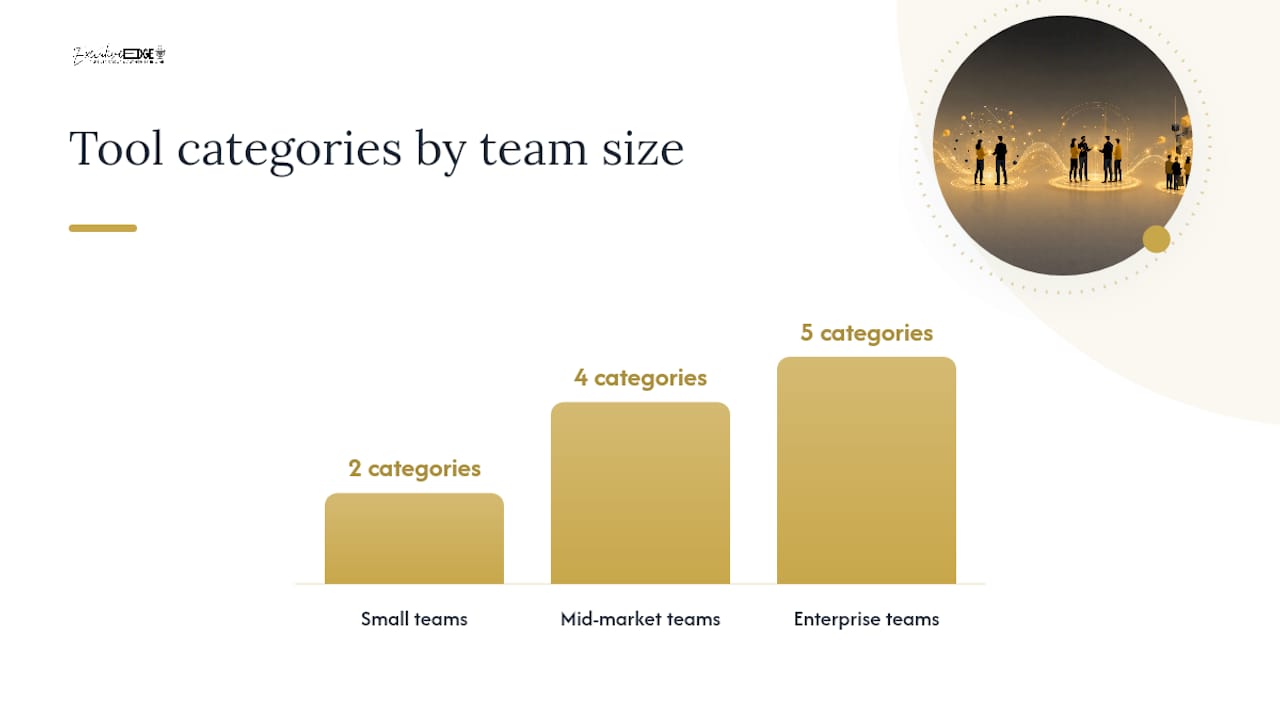
A workable stack pattern by team size: small teams usually need one generative tool plus one distribution platform. Mid-market teams add a dedicated optimization platform and a measurement layer. Enterprise teams tend to add agent-stack tools, autonomous systems that accept a goal and run multi-step campaigns with human validation checkpoints, which emerged as a distinct category in 2025 and 2026.
Why Most Teams Overbuild Their AI Stack
The mistake I see most often isn't picking the wrong tool category. It's picking too many of them at once, then never using half the features because nobody had time to learn them properly. A three-tool stack somebody actually understands beats a nine-tool stack that intimidates the team into ignoring it.
For business owners in Tyler and East Texas, the calculation usually comes down to time, not budget. A local attorney or contractor doesn't need to become an SEO specialist or learn a predictive analytics dashboard; they need the output those tools produce, more visibility, consistent content, better search placement, without personally running the pipeline. That's the honest dividing line: build an internal stack if content operations is core to your business model, or hire a done-for-you service if your actual job is practicing law, running job sites, or seeing patients.
A Managed Alternative to Building Your Own Stack
Running eight tool categories, keeping editorial standards consistent, and reviewing every AI draft is a real job, one most business owners never intended to take on. Executive Edge Partner Group built the Executive Edge Authority Engine specifically for professionals and local brands who want the output of a full amplification stack without hiring a team to run it.

The service covers:
- Weekly podcast, blog, and video content production
- SEO, GEO, and AEO optimization built into every asset
- AI-assisted drafting paired with human editorial review, not unsupervised automation
- Multi-channel distribution across search, YouTube, and social platforms
- Ongoing performance tracking so you know what's actually working
If reading through nine tool categories made the DIY route feel like a second job you don't have time for, see how Executive Edge Partner Group's authority-building system works and request a walkthrough of what a managed content and amplification calendar looks like for your business.
Sources
- AI in content marketing: How creators and marketers are using AI to speed up & succeed data
- AI content marketing strategies that scale production 2025 | Canva
- AI Marketing Tools 2026: 5 Categories + Tool vs Agentic AI · d-dat
- What Is Content Distribution Software? | Conbersa
FAQ
What are the main types of AI content amplification tools?
The main categories are generative AI, SEO/optimization platforms, social listening tools, predictive analytics, distribution/orchestration platforms, paid amplification tools, personalization engines, measurement/attribution platforms, and conversational AI, each solving a different stage of the content-to-audience pipeline.
What are the most effective AI tools for content development?
Generative AI tools for drafting and creative variants, paired with SEO/optimization platforms for search and AI-answer-engine visibility, cover the two biggest content-development bottlenecks: production speed and discoverability.
What are the 7 main types of AI used in marketing?
Common groupings include generative AI, natural language processing, predictive analytics, machine learning, computer vision, recommendation systems, and conversational AI; definitions vary by source, but these seven appear most consistently across marketing technology frameworks.
What are the most used AI tools in marketing today?
Adoption skews heavily toward generative AI for content creation, with 55% of marketers using AI for content creation and 47% for research, making generative tools the most widely used category by a clear margin.
How do I know which AI amplification tools to start with?
Start with one generative tool and one distribution platform, since together they cover creation and reach for most small and mid-size marketing teams, then add measurement tools once you need to prove what's working. Services like the Executive Edge Authority Engine handle this full combination for businesses that prefer a managed approach over building it internally.