

Audience targeting content is marketing material created specifically for defined audience segments, using shared characteristics and behaviors to maximize relevance and engagement. The industry term for this practice is "targeted content marketing," and it sits at the intersection of audience segmentation strategies and content personalization. Approximately $20 billion is lost annually due to ineffective targeting across programmatic ad spend alone. That number tells you everything about what happens when content reaches the wrong people. For business owners in Tyler and East Texas, getting this right is the difference between content that builds real authority and content that disappears into the noise.
What is audience targeting content and how does it work?
Audience targeting content is defined as any piece of marketing material, whether a blog post, video, email, or social post, built around the specific needs, behaviors, and motivations of a defined group. It is not the same as writing for a broad demographic. It means creating content that speaks directly to a person's situation, goals, and frustrations.
Three concepts often get confused: targeting, segmentation, and personalization. Segmentation is the process of dividing your audience into groups. Targeting is choosing which segments receive which content. Personalization is tailoring the message within that content to feel individual. All three work together, but they are distinct steps.
Segmenting audiences works best when you use multiple dimensions at once. The four primary methods are:
- Demographics: Age, gender, income, location, and job title
- Psychographics: Values, beliefs, lifestyle choices, and personality traits
- Behavioral data: Purchase history, content consumption patterns, and brand interactions
- Intent signals: Search queries, page visits, and content downloads that reveal what someone is actively researching
Multi-dimensional audience profiles consistently outperform single-factor segments. A local attorney targeting "35-to-54-year-old homeowners" will get better results than one targeting "adults in East Texas" with no further refinement.
First-party data versus third-party data
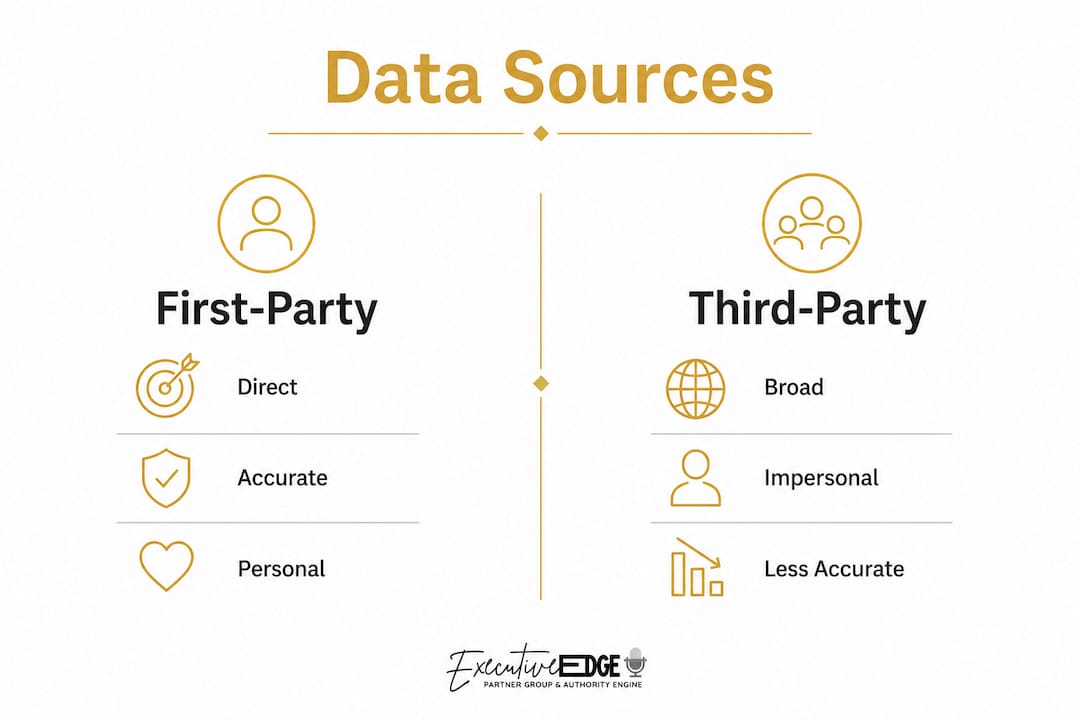
First-party data comes directly from your audience through surveys, email interactions, website behavior, and direct conversations. Third-party data is purchased or aggregated from external sources. First-party data uncovers emotional triggers that algorithms often miss entirely. A customer who tells you in a survey that they feel overwhelmed by legal paperwork gives you a content angle no data broker can sell you.
Third-party data has its place for reaching cold audiences at scale, but it lacks the nuance that drives real engagement. Build your first-party data collection as a core business asset.
Pro Tip: Combine your CRM data with social listening tools to identify the exact language your audience uses to describe their problems. Mirror that language in your content headlines and opening sentences.
How does AI and real-time data enhance audience targeting content today?
AI transforms audience targeting from a periodic exercise into a continuous, real-time process. Traditional segmentation meant building audience profiles once a quarter and hoping they held. AI processes millions of data points within minutes, enabling precise targeting that goes far beyond basic demographics.

The practical shift is significant. Instead of static segments, AI creates dynamic audience clusters that update as behavior changes. A prospect who reads three blog posts about cash flow management gets moved into a different content track than one who only visited your homepage. That kind of responsiveness was impossible without automation.
AI-driven content targeting works across several use cases:
- Predictive content recommendations: Serving the next most relevant article or video based on what a reader just consumed
- Email send-time optimization: Delivering messages when individual subscribers are most likely to open them
- Ad creative testing: Running dozens of message variations simultaneously and reallocating budget toward what converts
- Intent-based retargeting: Reaching people who showed research behavior but did not convert, with content that addresses their specific hesitation
AI shifts marketers from static segments to dynamic, continuously optimized audience models. That shift means your content strategy gets smarter over time rather than stale.
The caution here is real. AI surfaces patterns in data, but it cannot replace human judgment about what a message means to a person. A model might identify that a segment responds to urgency-based language without understanding that the same segment also values trust above speed. Human insight fills that gap.
Pro Tip: Use marketing automation tools to handle the data processing and segmentation mechanics, then apply your own editorial judgment to the actual content angle and tone. The machine finds the audience. You decide what to say.
What are best practices for creating content that resonates with targeted audiences?
Resonant targeted content starts with a clear understanding of your audience's pain points, not your product's features. The most common marketer mistake is creating content focused on sales rather than on what the audience actually needs over the next six months. That orientation shift changes everything about how you write.
Here are the core practices that separate content that converts from content that gets ignored:
-
Map content to specific pain points. Every piece of content should answer one question your audience is actively asking. If you cannot name the question before you write, stop and research first.
-
Choose formats your audience already uses. A segment of busy contractors will not read a 3,000-word white paper. They will watch a two-minute video on their phone between jobs. Format is part of targeting.
-
Balance data with storytelling. Combining analytics with human narratives improves engagement significantly. Data tells you what your audience cares about. A story makes them feel it.
-
Track resonance beyond vanity metrics. Page views and impressions tell you reach. Monitoring engagement, conversions, and feedback tells you whether the content actually worked. Time on page, scroll depth, and reply rates to emails reveal real resonance.
-
Test one variable at a time. Change the headline, the format, or the call to action, but not all three at once. You cannot learn from a test where everything changed simultaneously.
-
Revisit your audience profiles regularly. Psychographics and intent data are becoming more important than demographic filters in 2026 audience profiling. What your audience values shifts over time, and your content must shift with it.
The most common format mistake is treating all segments the same way. A real estate agent targeting first-time buyers needs entirely different content than one targeting investors. The topic might overlap, but the tone, depth, and emotional framing must be distinct. Real estate content that wins clients is almost always segment-specific, not generic.
How can local businesses apply audience targeting content effectively?
Local businesses have a natural advantage in audience targeting. You already know your community, your customers' names, and the specific problems your market faces. The challenge is translating that knowledge into a structured content strategy.
Typical audience segments for local service businesses include:
- New residents who need to establish relationships with local providers quickly
- Long-term community members who value reputation and word-of-mouth above all else
- Business owners seeking B2B services like accounting, legal, or marketing support
- Life-event-driven buyers such as people going through a home purchase, medical decision, or legal matter
Local demographic and psychographic data guides content creation in ways that national data cannot. A local HVAC company in a region with extreme summer heat writes very different content than one in a mild climate. That specificity is a competitive advantage.
Localized content strategies improve relevance for area-specific segments and drive stronger engagement for small businesses. Local platforms matter too. Neighborhood Facebook groups, community forums, and local business directories are often more effective for reaching defined local segments than broad national platforms.
Continuous learning from local customer feedback is the final piece. Ask your customers directly what content helped them make a decision. Their answers will tell you more about effective content personalization than any analytics dashboard.
Why most audience targeting advice misses the point
Most content about audience targeting focuses on tools and tactics. Build a persona. Run an A/B test. Use a CRM. That advice is not wrong, but it skips the harder question: do you actually understand what your audience is trying to accomplish?
I have worked with business owners who had detailed buyer personas, sophisticated segmentation, and solid data. Their content still underperformed. The reason was almost always the same. They were writing about their business instead of writing about their customer's life. The persona was a document in a folder, not a lens they used when sitting down to write.
The shift that actually changes results is treating your audience's goal as the primary subject of every piece of content. Your product or service is the supporting character. When a medical practice writes about managing chronic pain rather than about their treatment options, patients engage. When an attorney writes about what to expect during a divorce rather than about their firm's experience, prospects call.
Educational content marketing built around audience goals consistently outperforms promotional content built around business features. That is not a trend. It is how trust works.
The ethical dimension matters too. Audiences in 2026 are more aware of how their data is used. Targeting that feels intrusive or manipulative destroys the trust you are trying to build. Use data to serve your audience better, not to pressure them. The businesses that win long-term are the ones whose content makes people feel understood, not tracked.
— David Domm
How Executive Edge Partner Group builds your audience targeting system
Knowing what audience targeting content is and building a system that produces it consistently are two different problems. Executive Edge Partner Group works with business owners, consultants, and local brands to turn their real-world expertise into content that reaches the right people at the right time. The approach combines audience research, content planning, and multi-platform publishing to build authority that compounds over time.
For businesses ready to move from guessing to a structured content strategy, Executive Edge Partner Group provides the done-for-you system that handles the mechanics while you stay focused on your work. The result is a steady stream of targeted content that builds trust, improves search visibility, and keeps your brand top-of-mind with the segments that matter most to your growth.
FAQ
What is audience targeting content in simple terms?
Audience targeting content is marketing material created for a specific group of people based on their shared characteristics, behaviors, or goals. The goal is relevance: the right message reaches the right person at the right time.
How does audience segmentation differ from personalization?
Segmentation divides your audience into groups with shared traits. Personalization tailors the message within content to feel relevant to an individual within that group. Both work together but serve different functions in a content strategy.
Why is first-party data better for content targeting?
First-party data comes directly from your audience through surveys, purchases, and direct interactions, revealing emotional triggers and specific needs that third-party data sources cannot capture.
How does AI improve audience targeting content?
AI processes behavioral, intent, and psychographic signals in real time, shifting audience targeting from static quarterly profiles to dynamic models that update continuously as audience behavior changes.
What metrics should I track to measure targeted content success?
Track engagement depth metrics like time on page, scroll depth, and email reply rates alongside conversions. Monitoring these signals reveals whether content actually resonated, not just whether it was seen.