

The fastest way consultants win higher-quality clients is to publish a distinctive point of view consistently as thought leadership. Buyers respond to that consistency: Edelman's research shows hidden B2B buyers become more receptive to outreach from firms that publish strong thought leadership, and services like the Executive Edge Authority Engine exist specifically to make that consistency possible without turning a consultant into a full-time content creator.
Table of Contents
- Define Your Niche and Positioning
- Craft a Point of View and Signature Narrative
- Where Hidden B2B Buyers Actually Find You
- A Content Workflow Busy Consultants Can Actually Sustain
- Measuring the Brand Activities That Actually Lead to Client Wins
- A 4-Step, 90-Day Starter Plan for Consultants
- How a Done-for-You Authority System Accelerates This Plan
- Building a Personal Website That Actually Showcases Your Expertise
- Networking and Relationship-Building That Actually Generate Referrals
- Keeping Your Personal Brand Consistent Across Every Platform
- Using Testimonials and Case Studies to Build Credibility Faster
- Handling Personal Branding Challenges and Protecting Your Reputation
- Using Speaking Engagements and Webinars to Extend Your Reach
- Why I Treat Thought Leadership as a Revenue Line, Not a Marketing Extra
- Getting Started With the Authority Content System
- Sources
- FAQ
Define Your Niche and Positioning
A personal brand without a niche is just noise. Before you write a single post, decide who you serve, what outcome you deliver, and how you deliver it differently from everyone else in your field.
Pick your niche using four filters:
- Industry: choose one or two sectors where your experience gives you credibility, not every sector you could theoretically serve.
- Client size: mid-market operations teams need different language and proof points than enterprise buying committees.
- Outcome: name the specific result you produce, such as cutting onboarding time or fixing churn.
- Price point: a premium positioning attracts fewer, better-fit leads than a low-cost generalist stance.
Once you have those answers, write a one-line positioning statement: audience plus outcome plus method. For example, "I help mid-market SaaS founders cut customer churn through a 90-day retention audit." That sentence does more for your sales cycle than a polished logo ever will, because prospects self-select faster when they know exactly what you stand for.
Craft a Point of View and Signature Narrative
Consultants who blend in get compared on price. Consultants with a real point of view get hired for their thinking. The AMA's definition of thought leadership centers on originality and a willingness to take principled stands, and that tension, the friction between your stance and conventional wisdom, is what makes you memorable.
Turn your experience into a thesis with three steps:
- List five beliefs about your field that most peers would disagree with.
- Pick the belief you can defend with the most evidence from your own work.
- Write it as a single sentence a stranger could repeat back to you.
That sentence becomes your core argument. Break it into three or four content pillars, the recurring topics every piece of content ties back to, so your audience always knows what you stand for.
Pro Tip: Post your thesis as a short LinkedIn comment on someone else's content before you build a full article around it. If it sparks disagreement, you have a real point of view.
Where Hidden B2B Buyers Actually Find You
Most B2B buyers research quietly before a consultant ever hears from them. Edelman's research on hidden buyers found that a very large majority become more receptive to sales outreach from brands publishing strong thought leadership, and many say they are more likely to champion those vendors during an RFP process. That is a direct link between content and pipeline, not a branding nicety.
Start with three formats:
- LinkedIn posts and articles, because that is where most B2B research happens before a call is ever booked.
- One flagship long-form asset per month, such as a detailed article or white paper, that anchors your thinking.
- Podcast or video, which builds familiarity faster than text alone and gives you raw material for everything else.
Atomize that one flagship asset into a week's worth of social posts, quote graphics, and short clips instead of creating from scratch every day. Choose your first channel by asking where your buyers already spend research time, not where you personally enjoy posting.
A Content Workflow Busy Consultants Can Actually Sustain
The consultants who stick with thought leadership treat it like a production system, not a creative whim. A single recording session, done well, can fuel weeks of content.
- Block 60 to 90 minutes once a month to record an interview or solo talk on one flagship topic.
- Edit that recording into a long-form article, following a repeatable workflow rather than starting fresh each time.
- Extract six to eight short clips and ten to twelve quote or graphic assets for social distribution.
- Schedule that material across eight to twelve weeks instead of publishing it all at once.
A solo consultant can handle steps one and two alone but often needs help with editing and scheduling, which is where a content production company like MINIM can provide valuable support. That is where a production partner or a managed studio model, similar to what companies like MINIM offer for content production, becomes worth the cost.
Pro Tip: Write a one-page style guide covering your tone, banned phrases, and formatting preferences before you hire any editor. It saves more revision time than any other single document.
Measuring the Brand Activities That Actually Lead to Client Wins
Followers and likes to tell you nothing about revenue. Track metrics tied to buying decisions instead.
- Shortlist mentions: how often prospects cite your content when they explain why they contacted you.
- Lead quality: whether inbound leads already understand your positioning before the first call.
- Pipeline influence: the share of closed deals where content played a documented role.
Set up a simple monthly dashboard: ask every new lead how they found you, log the answer in your CRM, and review the pattern once a month. Content marketing's own research on business impact backs this approach over vanity tracking.
Thought leadership now shapes shortlisting decisions directly. Edelman and LinkedIn's 2025 report found that a notable proportion of B2B decision-makers say high-quality thought leadership influences shortlisting more than a vendor's name recognition. Use your dashboard results to refine your POV and drop formats that do not move the numbers above.
A 4-Step, 90-Day Starter Plan for Consultants
You do not need a year to see whether thought leadership works. Ninety days is enough to test a POV, produce real content, and see early signal in your pipeline.
- Weeks 1 to 2: Finalize your positioning statement and write your core thesis sentence.
- Weeks 3 to 6: Produce your first flagship asset, whether that is a long-form article or a recorded interview.
- Weeks 7 to 10: Atomize that asset into social posts, clips, and graphics, and publish on a fixed weekly schedule.
- Weeks 11 to 13: Review your dashboard, note which posts drove replies or calls, and adjust your next flagship topic.
Deliverables checklist for each step:
- One positioning statement and thesis sentence.
- One flagship long-form asset.
- A set of atomized social pieces scheduled across weeks.
- A monthly lead-source log.
Solo consultants should expect to spend four to six hours a week on this; small teams can compress the timeline by splitting recording, editing, and scheduling across people.
How a Done-for-You Authority System Accelerates This Plan
Most consultants stall at production and distribution, not strategy. Recording, editing, and scheduling consistently is where the 90-day plan breaks down for busy practitioners.
A done-for-you authority content system can help close that exact gap by completing a single recording session and guided intake, then producing weekly content across podcast, video, blog, and social channels without further recording sessions.
- Covers production: turns one session into weeks of atomized content.
- Covers distribution: publishes across multiple channels on a set schedule.
- Covers measurement: tracks content performance over time.
Consultants short on time or editing skill are the clearest fit for a done-for-you partner; those with in-house marketing support may prefer to run the workflow themselves.
Building a Personal Website That Actually Showcases Your Expertise
Your LinkedIn profile is rented land. A personal website is the one asset you fully control, and it should function as a portfolio, not a digital business card.
At minimum, include a clear positioning statement above the fold, so a visitor understands who you help and how within five seconds. Below that, a curated selection of your best work matters more than an exhaustive archive: three to five detailed case studies, each explaining the client's problem, your approach, and the outcome, do more for credibility than twenty thin project summaries.
Add a dedicated page for your point of view, essentially a hub for your flagship articles and recorded talks, so prospects researching you can absorb your thinking in one place instead of scrolling through old social posts. Link that page from your LinkedIn profile and your email signature.
Keep your bio focused on outcomes rather than credentials alone. A line like "I've helped operations leaders cut onboarding time by focusing on three friction points" tells a visitor more than a list of past job titles.
Finally, treat your site as living infrastructure, not a one-time project. Update it every time you publish a flagship asset or land a new case study, because a stale site undercuts the consistency your personal brand depends on everywhere else.
Networking and Relationship-Building That Actually Generate Referrals
Content builds awareness, but relationships close deals. The two should work together rather than compete for your time.
Treat every piece of content as a conversation starter rather than a broadcast. When someone comments on your article or shares your podcast episode, reply with a real question instead of a generic thank you. That single exchange often does more for a future referral than a cold outreach message ever could.
Prioritize a short list of recurring touchpoints over sprawling networking activity: one industry event or mastermind group per quarter, a handful of past clients you check in with regularly, and a small group of peer consultants you can trade referrals with. Depth in a few relationships tends to outperform breadth across hundreds of loose connections.
Use your content as an excuse to reconnect. Sending a past client an article that addresses a problem you know they are facing gives you a reason to reach out that feels helpful rather than salesy. This is a pattern we see work consistently for independent consultants building relationships across East Texas and beyond, where referral networks often matter more than paid advertising.
Finally, show up in rooms where your buyers already gather, whether that is a regional industry association or a niche online community, and contribute before you ever pitch. Consistency in those spaces compounds the same way consistent publishing does.
Keeping Your Personal Brand Consistent Across Every Platform
A personal brand falls apart when your LinkedIn voice sounds nothing like your website copy, or your podcast tone contradicts the polished bio on your speaker page. Consistency is what makes a brand recognizable rather than just present.
Start with a short style guide: your tone, the phrases you avoid, and two or three signature terms tied to your point of view. Apply it everywhere, from email signatures to podcast intros.
Your profile photo, bio, and positioning statement should match word for word, or close to it, across LinkedIn, your website, and any guest podcast appearances. Small inconsistencies, like a different tagline on every platform, make prospects wonder which version of you is real.

Content marketing research points to governance as the operational difference between consultants who sustain a brand and those who burn out chasing it. CMI's research on B2B content trends found that top performers treat governance and measurement as seriously as content production itself, rather than publishing at volume without a system behind it.
Review your public presence quarterly: check that your bio, pinned posts, and website copy still reflect your current positioning. A consultant who shifted focus six months ago but still has an outdated bio is sending mixed signals to exactly the buyers they are trying to attract.
Using Testimonials and Case Studies to Build Credibility Faster
A strong point of view gets attention, but proof closes deals. Testimonials and case studies are the bridge between what you claim and what a prospect can verify.
Structure case studies around problem, approach, and outcome rather than a vague summary of the engagement. A prospect skimming your website should be able to see, in under thirty seconds, what kind of problem you solve and what changed because of your work.

Ask for testimonials immediately after a project wins, not months later when the client's memory of specifics has faded. Specific testimonials, ones that name the actual result rather than praising your personality, carry more weight with skeptical buyers.
Feature testimonials and case studies inside your content, not just on a dedicated page. A LinkedIn post that references a real (anonymized, if needed) client outcome does more for credibility than the same claim made in the abstract. Rotate a handful of your strongest proof points across your flagship content over the year so returning visitors see fresh evidence each time.
Handling Personal Branding Challenges and Protecting Your Reputation
Publishing a strong point of view invites disagreement, and that is by design. The goal is not to avoid friction but to handle it in a way that reinforces your credibility rather than undermining it.
When someone challenges your take publicly, respond with reasoning rather than defensiveness. A thoughtful reply that acknowledges a valid counterpoint while restating your position often builds more trust than the original post did.
Set up basic reputation monitoring: a simple alert for your name and firm, and a habit of checking your own search results every few months. Address inaccurate information quickly and directly, whether that means correcting a misquote or reaching out privately to resolve a public misunderstanding before it escalates.
Consistency also protects you here. A consultant whose public stance shifts dramatically from one post to the next looks unreliable, even if each individual post is defensible. Anchor every piece of content back to your core thesis, so even contrarian takes read as consistent with who you already are.
Using Speaking Engagements and Webinars to Extend Your Reach
Speaking puts your point of view in front of an audience that already trusts the room, whether that is a conference stage or a small industry webinar.
Start with webinars if stage opportunities feel out of reach. A 30-minute session on a narrow topic tied to your thesis, hosted for a partner's audience or your own list, builds the same credibility as a conference talk with far less setup.
Treat every talk as flagship content in its own right. Record it, extract clips for social posts, and pull direct quotes for your website, the same atomization approach you use for a podcast session.
Pitch conference organizers with a specific, contrarian angle rather than a generic bio. Organizers fill agendas with speakers who bring a clear argument, not a resume.
Why I Treat Thought Leadership as a Revenue Line, Not a Marketing Extra
Consultants often treat content as something to get to eventually. That backward priority costs shortlist spots. When a firm publishes a clear point of view consistently, prospects arrive already sold on the thinking, which shortens the sales cycle more than any pitch deck. I have watched this pattern hold for independent consultants around Tyler and across East Texas just as often as in larger markets. Scale with a partner once production, not strategy, becomes your bottleneck.
— David Domm
Getting Started With the Authority Content System
Most consultants already know they should be publishing consistently. The gap is almost always time, not strategy, and that is exactly what the Authority Content System is built to close.
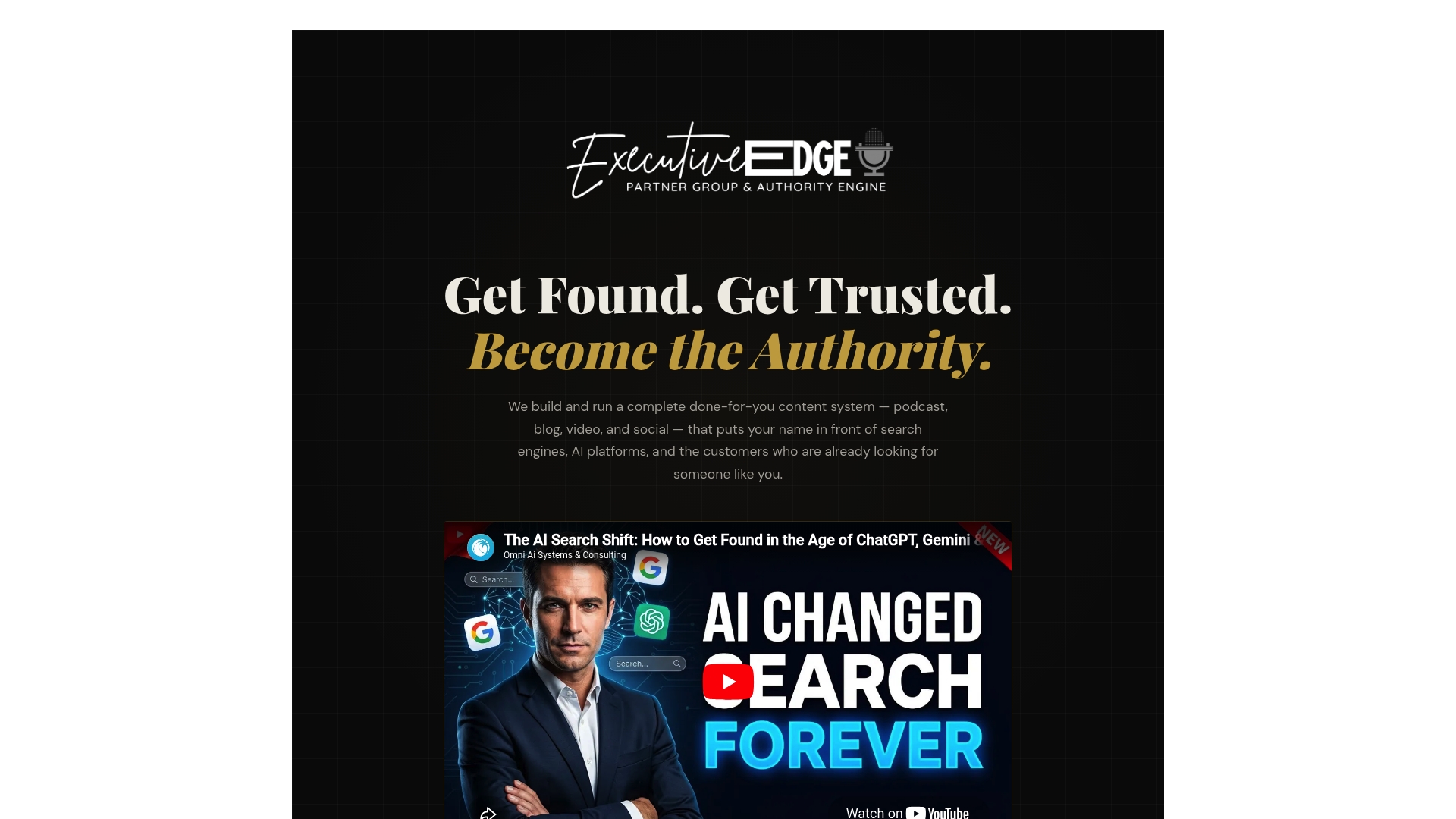
A single recording session and guided intake are enough to get started. From there, the system produces weekly content across podcast, video, blog, and social channels using voice cloning, so you are not stuck recording every week just to stay consistent.
- One recording session replaces weeks of ongoing content creation.
- Weekly output spans podcast, video, blog, and social formats.
- Built for consultants who want consistency without becoming a full-time publisher.
If the 90-day plan above sounds right but the execution feels like more than your schedule allows, explore the Authority Content System and book a conversation about what a done-for-you version of this plan looks like for your practice.
Sources
- Hidden buyer B2B — Edelman
- B2B content marketing trends and benchmarks — Content Marketing Institute
- What is the definition of thought leadership? — AMA
FAQ
What Is the 3-7-27 Rule in Branding?
Definitions of the 3-7-27 rule vary across marketing sources, and no primary research entry here defines it precisely. A common version suggests a prospect needs multiple impressions of your brand to move from awareness through consideration to trust, though the specific counts differ by source.
What Are Some Personal Brand Examples for Consultants?
A strong consultant personal brand usually centers on one clear positioning statement paired with a consistent point of view, such as a churn specialist known for a specific audit method. The strongest examples pair a flagship content asset, like a signature article or podcast, with visible proof points such as case studies and testimonials.
What Are the Five C's of Personal Branding?
Frameworks describing the "five C's" vary by source, and none of the research cited here defines a single canonical version. Most versions emphasize clarity, consistency, and credibility as shared themes, which aligns with the positioning and governance practices covered throughout this article.
What Are the Seven Pillars of Personal Branding?
Like the five C's, the "seven pillars" framing differs depending on the source, and no primary research entry here defines an official list. The practices that consistently matter across the research cited, a clear niche, an original point of view, consistent publishing, and measurable business impact, cover the ground most versions of this framework aim for.
How Long Does It Take to See Results From Consultant Thought Leadership?
Most consultants see early signal, such as inbound replies or shortlist mentions, within the first 90 days of consistent publishing. Measurable pipeline influence typically takes longer to confirm, which is why tracking lead source and shortlist mentions from day one matters more than waiting for a single big result.