

Speaking content becomes SEO when audio or video recordings are transcribed, structured, and published as crawlable, keyword-rich text that search engines and AI platforms can read and rank. Podcasts, webinars, and recorded interviews contain thousands of natural, conversational words that Google cannot index from audio alone. The fix is straightforward: turn those spoken words into formatted text. A 45-minute podcast episode produces 5,000–8,000 spoken words, enough to fuel multiple blog posts, FAQ pages, and topic clusters. For business owners in Tyler and East Texas, this process is one of the most cost-effective ways to build search authority without starting from a blank page.
How speaking content becomes SEO through transcription
The first step is converting audio to text. A 15-minute recording produces roughly 1,800–2,200 words, which is more than enough for a full SEO-optimized article. That single fact changes how you should think about every recorded conversation you have.
Raw transcripts, however, are not ready to publish. They contain filler words like "um," "you know," and repeated phrases that make text hard to read and harder for search engines to interpret. The professional practice is called transcript-driven content. It uses AI transcription tools to generate a first draft, then applies manual editing to remove filler, add H2 and H3 headings, bold key terms, and restructure the flow into scannable sections.

The structural difference between a raw transcript and a cleaned, formatted post is significant. Raw transcripts need cleaning and restructuring to satisfy search engines and keep readers on the page. A wall of unbroken text signals low quality to Google's crawlers, while a well-formatted post with clear headings signals authority.
Answer-first structuring is the most important formatting habit. Answering questions first in spoken content greatly increases the chances of winning featured snippets and appearing in AI answer boxes. This means leading each section with a direct answer, then expanding with context and examples.
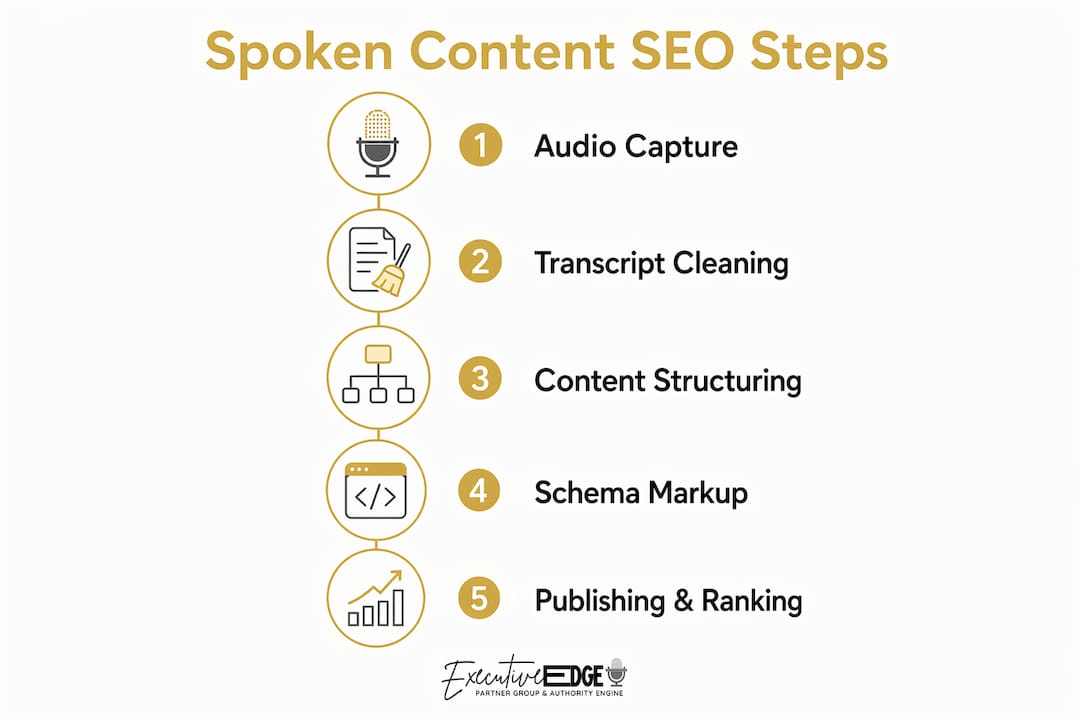
Here is a simple four-step process for turning a recording into a published SEO post:
- Record your audio or video with a clear topic and a direct opening answer.
- Run the file through an AI transcription tool to generate raw text.
- Edit the transcript: remove filler words, add headings, bold key phrases, and break long paragraphs into 3–5 sentence blocks.
- Publish the formatted post on your website with the audio player embedded on the same page.
Pro Tip: Structure your transcript so the first sentence of each major section answers a specific question. Google's AI Overviews pull answers from the opening lines of well-structured sections, not from buried paragraphs.
Why natural spoken language is an SEO advantage
Conversational language is not a weakness in SEO. It is an advantage. Natural, conversational spoken language matches how people actually type and speak their search queries, which improves engagement and aligns with how AI and natural language processing (NLP) systems interpret content.
Search intent in 2026 reflects natural language. People search for "how do I get more clients as a consultant" not "client acquisition strategies for consultants." Spoken content naturally produces the first style. Formal written content tends to produce the second. The transcript from a casual podcast interview often contains more long-tail keyword phrases than a carefully written blog post.
The mistake most creators make is over-editing transcripts to sound more "professional." Stripping out the conversational tone removes the very language patterns that match real search queries. The goal is to clean the transcript, not formalize it.
Here are the spoken content habits that produce the strongest SEO results:
- Answer first. Open every topic with a direct answer before explaining the background.
- Number your points. Saying "there are three reasons" on a recording creates natural list structure in the transcript.
- Use clear transitions. Phrases like "the next step is" or "here is the second point" create scannable structure without editing.
- Speak in short sentences. Short sentences transcribe cleanly and match the sentence length that AI systems prefer for citations.
- Repeat key phrases naturally. Saying your core topic phrase two or three times in a recording builds keyword density without stuffing.
Pro Tip: Before you record, write three to five questions your ideal client would type into Google. Answer each one directly in your recording. That habit alone turns every episode into a voice search SEO asset.
How does schema markup improve spoken content visibility?
Schema markup is structured data code added to a webpage that tells search engines exactly what type of content they are reading. For spoken content, three schema types matter most.
| Schema Type | What It Signals | Primary Benefit |
|---|---|---|
| PodcastEpisode JSON-LD | Identifies audio as a podcast episode | Improves indexability in podcast directories and Google |
| VideoObject | Marks video content with title, duration, and thumbnail | Enables rich results in Google video search |
| Speakable | Flags specific text sections as ideal for voice reading | Increases chances of voice search and AI assistant citations |
Schema markup such as VideoObject and PodcastEpisode JSON-LD improves indexability and SERP features for spoken content. That matters especially for small businesses competing against larger sites with bigger content budgets.
Speakable Schema implementations correlate with better featured snippet performance. The Speakable schema tells Google which paragraphs are best suited for reading aloud in voice search results. Marking your direct-answer paragraphs with Speakable schema is one of the most underused tactics in audio content SEO.
Most website platforms support schema through plugins or built-in structured data fields. WordPress users can add JSON-LD blocks manually or through SEO plugins. The key is to add schema at the page level, not just the site level, so each episode or video page carries its own structured data.
Page design also affects how well spoken content ranks. Publish the audio player, the full transcript, and detailed show notes on the same URL. Search engines reward pages where the text and the media reinforce each other.
Practical steps to publish spoken content for SEO
Publishing spoken content for SEO is a repeatable system, not a one-time project. The compounding effect of consistent publishing is what builds long-term authority. Each new episode adds another indexed page, another set of long-tail keywords, and another internal linking opportunity.
Google's AI Overviews prioritize well-structured transcripts as primary data for featured snippets. That means every formatted transcript page you publish is a candidate for AI citation. The more pages you have, the more surface area you create for search engines to find and feature your content.
- Record with SEO in mind. Open each recording by stating the topic and answering the core question directly. This creates a ready-made featured snippet in the transcript.
- Use AI transcription with manual cleanup. AI tools handle the first pass quickly. Manual review catches errors, adds context, and improves readability.
- Format with headings and bold text. Break the transcript into sections with H2 and H3 headings. Bold the key terms and direct answers so crawlers and readers can both scan efficiently.
- Publish on the same URL as the audio. Publishing transcripts on the same URL as the audio player maximizes SEO value and reduces bounce rates by giving readers a reason to stay.
- Write detailed show notes. Show notes are not summaries. They are keyword-rich descriptions that add indexable text above the transcript.
- Build internal links between related pages. Two to three contextual internal links per long-form post is the optimal range for distributing authority and improving topical relevance across your site.
- Publish on a consistent schedule. Weekly or biweekly publishing creates a compounding SEO effect. Each new page reinforces the authority of existing pages on the same topic.
You can also use transcript content to feed related formats. Pull key quotes for social posts, extract FAQ sections for standalone pages, and use the long-tail phrases you find in transcripts to guide future recording topics. The podcast marketing system that works in 2026 treats every episode as a content hub, not a single piece of media.
What I have learned from watching spoken content drive real rankings
The biggest misconception I see is that spoken content is a secondary SEO asset. Business owners record a podcast, post the audio, and move on. They leave the transcript, the schema, the internal links, and the featured snippet opportunities sitting on the table.
The businesses that win with this approach treat the recording as the raw material and the formatted transcript page as the actual product. I have watched service businesses go from zero organic traffic to ranking on page one for competitive local terms, not because they wrote more blog posts, but because they started publishing structured transcripts from conversations they were already having.
The pitfall I see most often is the raw transcript dump. Someone publishes an unedited transcript, the page gets indexed, and then it sits there with a high bounce rate and no rankings because it reads like a wall of text. Over-editing is the opposite problem. Stripping out all the natural language removes the long-tail keyword phrases that made the content valuable in the first place.
The future of this practice is only getting stronger. AI search engines like Perplexity and Google's AI Overviews are pulling answers from structured text pages at a rate that rewards exactly this kind of content. Voice search complexity is increasing, and Speakable schema is becoming a real differentiator. The businesses that build this system now will have a compounding advantage that is very hard to replicate later.
My honest recommendation: start with one episode, build the full transcript page with proper formatting and schema, and measure the organic impressions over 90 days. The results will make the case better than any argument I can offer.
— David Domm
How Executive Edge Partner Group helps you turn spoken content into search rankings
Executive Edge Partner Group works with business owners and content creators who want their spoken expertise to show up in search results, not just in audio players.
The Executive Edge Authority Engine handles the full process: recording strategy, AI-assisted transcription, transcript-driven content formatting, schema markup implementation, and multi-platform publishing. Every episode becomes a structured, indexed page designed to rank on Google, appear in AI Overviews, and build topical authority over time. If you are ready to stop leaving your spoken content on the table, visit Executive Edge Partner Group to see how the system works for local businesses, consultants, and service providers who want real search visibility without becoming full-time writers.
FAQ
What does "speaking content becomes SEO" mean?
Speaking content becomes SEO when audio or video recordings are transcribed, formatted with headings and keywords, and published as crawlable text pages that search engines can index and rank.
How many words does a podcast episode produce for SEO?
A 45-minute podcast episode produces roughly 5,000–8,000 spoken words, which is enough for multiple SEO-optimized blog posts or topic cluster pages.
Does schema markup really help spoken content rank?
Yes. VideoObject and Speakable schema improve indexability and increase the chances of appearing in featured snippets and voice search results, especially for small business sites competing against larger publishers.
Should I publish the full transcript or just show notes?
Publish both on the same URL. The full transcript provides keyword depth and featured snippet opportunities, while show notes add structured, scannable context that reduces bounce rates and improves crawlability.
How often should I publish transcript-based content for SEO?
A consistent weekly or biweekly schedule produces the strongest compounding effect. Each new transcript page reinforces the authority of existing pages and expands your site's topical coverage over time.