
The winning YouTube content strategy for 2026 is the barbell model: Shorts for discovery, long-form for conversion, and a tight feedback loop between them. Prioritize two numbers above everything else: first-30-second retention and session contribution, the share of watch time your channel adds to a viewer's browsing session. Everything below shows you how to build a publishing system around those two metrics instead of guessing.
Table of Contents
- Why the Barbell Model Wins: Shorts for Discovery, Long-Form for Conversion
- Set SMART Channel Goals and Map Audience Intent
- Build a Repeatable Content Calendar Through Batching
- Craft Hooks, Thumbnails, and Mobile-First Edits That Hold Attention
- Choose Focus Keywords and Optimize Metadata for Search
- Turn Uploads Into a Distribution and Promotion System
- Track the Metrics That Actually Predict Growth
- How a Done-for-You Authority Engine Applies This Strategy
- What I'd Actually Do This Week
- Want the Barbell Strategy Without Doing the Production Yourself?
- Sources
- FAQ
Why the Barbell Model Wins: Shorts for Discovery, Long-Form for Conversion
Most channels split their effort evenly across formats and wonder why growth stalls. The barbell model rejects that balance on purpose. It pushes resources to the two ends of the format spectrum, short and long, because those two ends do fundamentally different jobs, while skipping the mid-length videos that tend to satisfy neither goal.
Shorts exist to get you found by people who have never heard of your channel. YouTube Shorts crossed 50 billion daily views, which makes it the largest low-friction discovery surface on the platform right now. A Short does not need to convert anyone into a customer. It needs to earn a swipe, a loop, or a follow, then hand that curiosity off to something bigger.
Long-form is where the actual business outcome happens. A 12 to 20-minute video builds the trust that a 45-second clip cannot. It is where you demonstrate expertise, answer objections, and give viewers enough time on screen to decide you know what you are talking about. Short-form and long-form content are judged by different ranking systems, swipe and loop signals for Shorts, watch-time and satisfaction signals for long-form, so treating them as one undifferentiated content strategy YouTube channels can just "post more of" is a mistake.
The barbell splits outcomes cleanly:
- New-subscriber attraction: driven almost entirely by Shorts reaching cold, algorithm-fed audiences.
- Session time and satisfaction: driven by long-form videos that hold attention past the first two minutes.
- Conversions and revenue per view: driven by long-form CTAs, pinned comments, and description links that lead somewhere specific.
- Retention data for future planning: long-form analytics tell you which topics justify another Short.
The connective tissue is atomization, the practice of cutting one long-form shoot into 6 to 12 Shorts. Each long-form asset becomes a discovery engine after the fact, feeding the top of the funnel for weeks without a second shoot day. That is the flywheel: one production session generates constant discovery content while the anchor video keeps doing the conversion work in the background. Businesses treating YouTube as search, discovery feed, and ad network simultaneously get more mileage from the same camera time than channels chasing either format alone.
Set SMART Channel Goals and Map Audience Intent
A youtube content plan without a measurable goal is just a posting habit. Before you script a single video, define what "working" actually means in numbers, not vibes.
Three examples of SMART goals that hold up under scrutiny:
- Lead generation: Generate 40 qualified form fills per month from YouTube by week 16, tracked through a unique landing page link in every long-form description.
- Qualified traffic: Grow returning-viewer sessions by 25% within one quarter by publishing a weekly long-form video tied to a consistent playlist.
- Revenue per view: Increase average revenue per 1,000 views on your top three conversion videos by 15% over 90 days through CTA placement testing.
Notice none of these say "get more views." Views without a business outcome attached are a vanity metric for anyone running a youtube marketing plan tied to real revenue.
Audience intent research is the other half of the equation, and most channels skip it entirely. Three low-cost methods work reliably:
- YouTube search itself. Type your core topics into the search bar and study the autocomplete suggestions and the videos that already rank. That is unfiltered demand data.
- Comment sections, yours and competitors'. Recurring questions in comments are content ideas your audience is handing you for free.
- Competitor gap analysis. Look at what similar channels rank for and find the subtopics they have not covered well, or covered years ago with outdated information.
Once you have intent signals, sort them into three buckets: learn (early-stage, informational, good for Shorts and short explainer videos), decide (comparison and how-to content, ideal for mid-length long-form), and buy (case studies, demos, and testimonials, your highest-intent long-form content).
Pro Tip: Tag every video idea with its intent bucket before you script it. If you cannot name the bucket, the video does not have a clear job yet, and that ambiguity is exactly why so many videos underperform.
Build a Repeatable Content Calendar Through Batching
Consistency beats intensity on YouTube. A channel that publishes one solid long-form video every week for six months will outperform a channel that posts daily for three weeks and disappears.
Two cadence templates cover most situations. The weekly steady-state model runs one long-form video per week plus three to four Shorts atomized from that same shoot, spaced across the days between uploads. The 12-week launch framework front-loads effort: batch-produce four long-form videos in one intensive production block, then spend the following eleven weeks releasing one per week alongside a steady drip of Shorts, using early analytics to decide what to make next. This kind of timed batching cycle gives you enough data by week six to know which topics are working before you commit to more.
Batch-shooting is what makes either template sustainable. Instead of one video per shoot day, plan a single session around one core topic and record:
- The full long-form video (15 to 20 minutes).
- Three to five vertical cutdowns that isolate strong moments, each reframed with its own hook.
- One or two "behind the topic" Shorts that tease the long-form video specifically.
- B-roll and cutaways you can reuse across future edits.
That single shoot day now feeds two to three weeks of publishing across formats, which is the operational backbone of the barbell strategy described earlier.
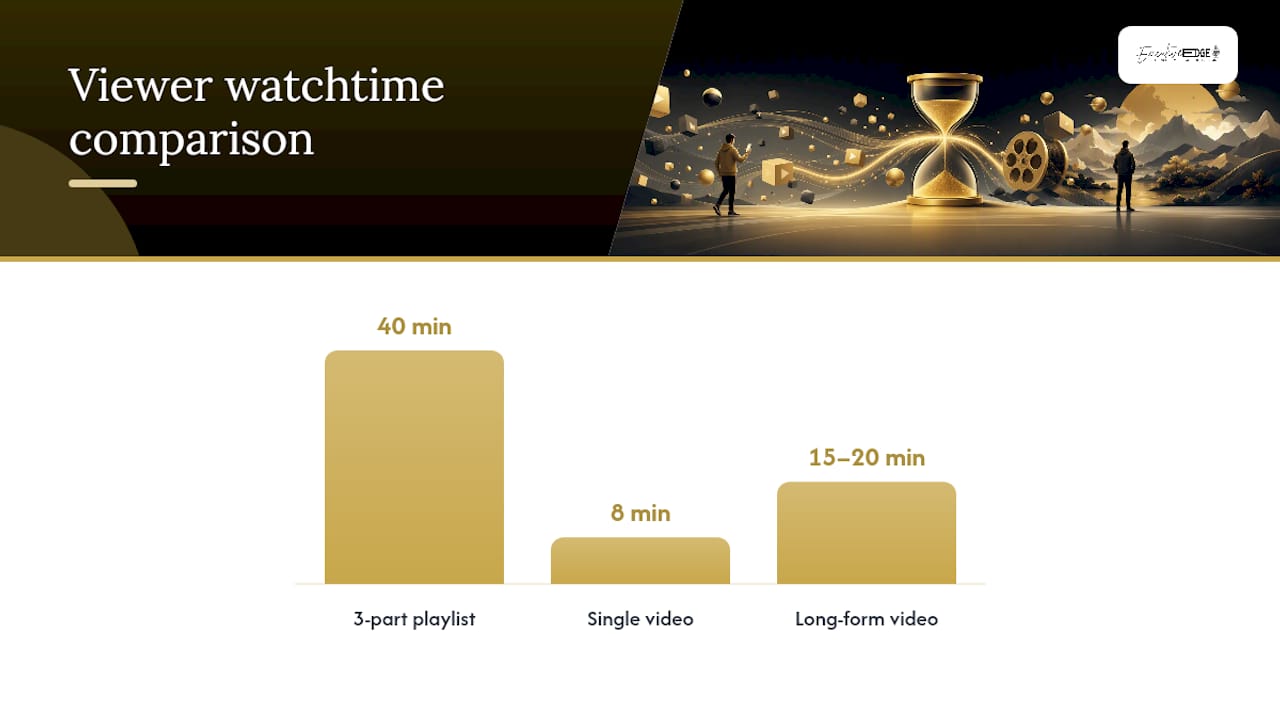
Playlists deserve more attention than most channels give them. Grouping videos into a tightly themed playlist, rather than a loose catch-all, increases session contribution because YouTube can recommend the next video in sequence automatically. A three-part series on one narrow problem, released as a dedicated playlist, keeps a viewer watching your channel for 40 minutes instead of 8.
Pro Tip: Name your playlists the way a viewer would search, not the way you'd title a folder on your desktop. "Small Business Tax Deductions Explained" pulls search traffic; "Tax Series" does not.
Craft Hooks, Thumbnails, and Mobile-First Edits That Hold Attention
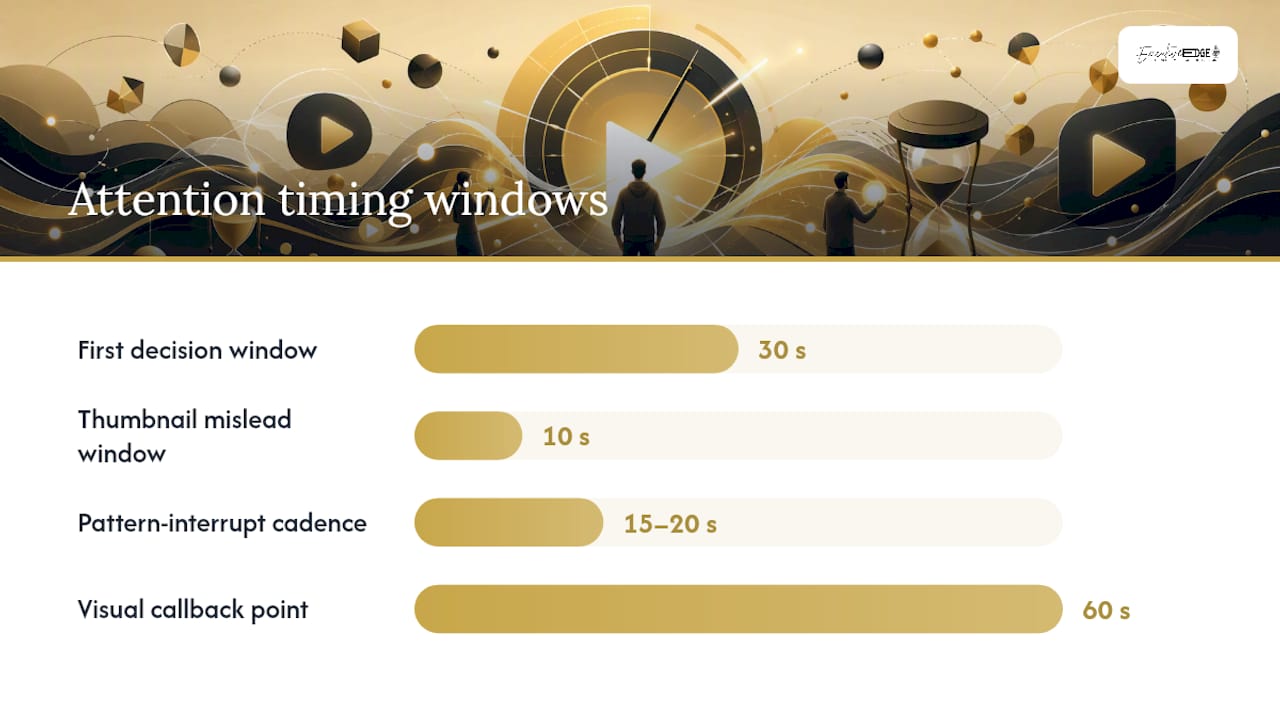
The first 30 seconds decide whether the rest of your video matters. Viewer satisfaction and session continuation now outweigh raw watch time as ranking signals, which means a video that delivers its promise fast gets rewarded twice: once by the viewer staying, once by the algorithm noticing they stayed.
Three opening-line templates consistently outperform a slow windup:
- The direct promise: "By the end of this video, you'll know exactly how to [specific outcome]." State the payoff before anything else.
- The stakes flip: Open on the cost of getting it wrong, then pivot to the fix. "Most businesses lose their first lead within 24 hours. Here's why."
- The proof-first cold open: Show the result before explaining how you got there, then rewind to the process.
Thumbnail and title alignment matters as much as the hook itself. A thumbnail that overpromises drags your click-through rate up while retention collapses, because viewers feel misled within the first ten seconds. YouTube's native Test & Compare feature lets you A/B test thumbnails against real audience segments instead of guessing which version performs better. Run every important upload through it rather than trusting your own eye.
Editing choices that measurably help first-minute retention:
- Pattern interrupts every 15 to 20 seconds: a cut, a graphic, a change in camera angle.
- Burned-in captions, since a large share of mobile viewers watch muted.
- Dynamic cuts that remove dead air and filler words entirely.
- A visual callback to the hook's promise around the one-minute mark, reminding viewers why they are still watching.
If your channel uses AI voice or video tools anywhere in production, label that content per YouTube's synthetic-media disclosure requirements. Skipping the label risks a discoverability penalty, not just a policy violation.
Choose Focus Keywords and Optimize Metadata for Search
YouTube SEO still runs on the same basic principle as web search: match what people type to what your video actually delivers. The difference is that YouTube also weighs how well your video keeps the promise your metadata makes.
- Pick one primary keyword per video, based on autocomplete volume and how well existing top-ranking videos actually answer it. Put that keyword in the title within the first 60 characters, in the file name before upload, and naturally in the first sentence of the description.
- Write the first two lines of your description like ad copy. YouTube truncates the description in search results and on mobile, so those first two lines need the keyword and a reason to click, not a legal disclaimer or a channel bio.
- Add chapters to every long-form video over eight minutes. Chapters improve session behavior by letting viewers jump to the section they need, which supports the same session-contribution signals that playlists reinforce.
- Enable auto-captions, then correct them, and add translated subtitles for your top three performing videos if you have any audience outside English-speaking regions. Video content already ranks well in general search results, and translated subtitles extend that reach into markets your title alone will not touch.
- For Shorts, front-load the keyword in the on-screen text and the caption, since Shorts search behavior leans more visual and less deliberate than long-form search.
Tags carry less weight than they did years ago, but they still help disambiguate a video's topic for the algorithm, so use three to five specific tags rather than fifteen vague ones.
Turn Uploads Into a Distribution and Promotion System
Publishing a video is the start of the work, not the end of it. A distribution checklist keeps every upload working past its first 48 hours instead of fading once the initial subscriber notification wears off.
- Atomize every long-form video into 6 to 12 pieces: vertical Shorts for YouTube, the same clips reformatted for other short-form platforms, and one or two static-image posts pulling a quote or stat from the video.
- Build playlists around themes, not upload dates, so a new viewer who finds one video gets steered into three or four related ones automatically.
- Use end screens to point at your single best-converting video, not a random recent upload. End screens are prime real estate; waste them on your weakest content and you lose viewers who were ready to stay.
- Pin a comment with your CTA and link on every video, since pinned comments outperform description links for click-through on mobile.
- Post a Community update the day before a major upload, teasing the topic to your existing subscriber base and priming the algorithm with early engagement.
- Test paid seeding on your two or three strongest videos, starting with a modest daily budget over one to two weeks, and measure cost per new subscriber and watch-time-per-dollar rather than raw impressions.
Cross-posting Shorts to other platforms costs almost nothing once the clip exists, and a distribution approach that treats YouTube alongside other channels tends to outperform one that treats YouTube in isolation. A partner-side breakdown of Shorts-specific growth tactics is worth reviewing if Shorts distribution specifically is where your team is weakest.
Track the Metrics That Actually Predict Growth
Most channels drown in vanity metrics and ignore the four or five numbers that actually predict whether a channel will keep growing. Prioritize them in this order:
- First-minute retention. If viewers drop before 60 seconds, no other metric matters yet; fix the hook before touching anything else.
- Average view duration (AVD). A rising AVD on new uploads means your content is getting better at delivering on its promise, not just attracting clicks.
- Session contribution. How much additional watch time does your video add to a viewer's broader YouTube session? This is one of the clearest signals the recommendation system rewards in 2026.
- Click-through rate (CTR). Useful, but only alongside retention. A high CTR paired with a retention crash usually means the thumbnail overpromised.
- New-viewer ratio. Track what percentage of each video's audience is new versus subscribed, since a healthy channel needs both discovery and loyalty in balance.
Run thumbnail and title tests on a fixed schedule rather than randomly. A reasonable cadence is one active test per upload for your top three weekly videos, each test run for at least 5,000 to 10,000 impressions before you call a winner, since smaller sample sizes produce noisy results that lead to false conclusions.
Statistic Callout: Shorts have surpassed 50 billion daily views platform-wide, which is precisely why treating Shorts as your discovery engine, rather than an afterthought, matters more in 2026 than it did even two years ago.
The 12-week framework mentioned earlier gives you a natural checkpoint structure: iterate weekly on thumbnails and hooks, pause any content bucket that shows flat or declining first-minute retention by week six, and scale production only on the topic clusters that show rising session contribution by week twelve.
How a Done-for-You Authority Engine Applies This Strategy
Everything above is achievable without outside help if you have the time, the camera skills, and the discipline to batch consistently for months. Most business owners do not, which is the entire reason managed content systems exist.
Executive Edge Partner Group built the Authority Engine around the exact barbell logic this article describes, applied specifically to business owners, consultants, and professionals rather than hobbyist creators. The system delivers:
- Weekly long-form production paired with atomized Shorts pulled from the same shoot, so the flywheel described earlier runs without the client managing a production calendar.
- Generative Engine Optimization (GEO) and Answer Engine Optimization (AEO) layered onto standard YouTube SEO, positioning content for AI-driven search discovery alongside traditional YouTube search.
- Multi-platform distribution and amplification, so a single planning session produces assets across YouTube, blog, podcast, and social without separate production cycles for each.
A typical workflow looks like this: a planning session maps SMART goals and intent buckets, a batch production day captures long-form and short-form assets together, an atomization pass turns that single shoot into a week or two of publishable content, and an amplification phase pushes everything across owned and earned channels. It mirrors the outcomes local businesses see from consistent video investment, just executed on a managed cadence.
The honest decision guide: if you have a dedicated team member who can commit five or more hours weekly to filming and editing, DIY can work. If content keeps sliding to the bottom of your priority list every week, a managed partner is the faster path to consistency.
What I'd Actually Do This Week
Skip the twelve-tab spreadsheet. Do three things: spend an hour reading your own comments and competitor comments for recurring questions, batch-shoot one long-form video with three Shorts pulled from it, and publish on a fixed day you can repeat weekly.
Expect early signals by week four or five, not week one. The most common mistake is judging a new content strategy on the first two uploads and abandoning it before the algorithm has enough session data to know what to do with your channel.
We see this pattern constantly with business owners across Tyler and East Texas: the channels that stall are the ones waiting for virality before they commit to a schedule. The ones that grow just kept the calendar.
— David Domm
Want the Barbell Strategy Without Doing the Production Yourself?
Executive Edge Partner Group runs this entire playbook for business owners who want the results without becoming a full-time video editor. Instead of hiring a traditional agency that bills separately for strategy, filming, editing, and distribution, you get one done-for-you system that handles weekly long-form production, Shorts atomization, GEO and AEO optimization, and multi-platform distribution under a single managed retainer.
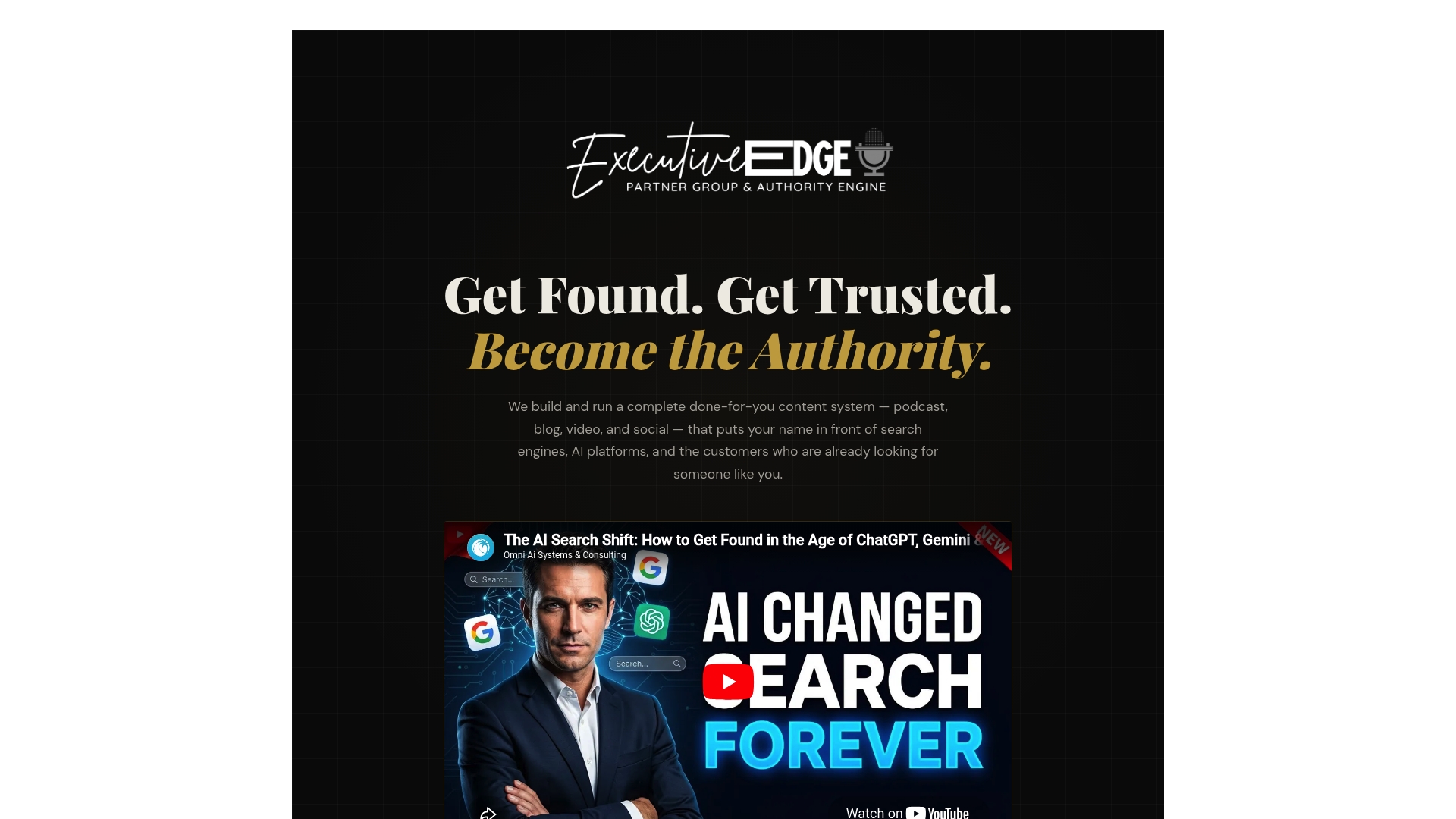
The service ties directly to the KPIs covered above: first-30-second retention built into every script, session contribution engineered through playlist and series design, and revenue-per-view tracked through CTAs mapped to your actual landing pages. If your channel is a side project competing with running the business itself, that gap is exactly what the Authority Engine closes.
DIY works fine if someone on your team can commit real weekly hours to filming and editing. If that person does not exist, or the calendar keeps slipping, start with a channel audit through Executive Edge Partner Group and get a straight answer on whether managed production fits your goals before committing to anything.
Sources
- YouTube Marketing: How the algorithm works in 2026
- Google says YouTube Shorts has crossed 50 billion daily views
- YouTube Algorithm: How It Works & Optimization Tips (Shopify)
FAQ
What Is a YouTube Content Strategy?
A YouTube content strategy is a documented plan connecting channel goals, audience intent, content formats, publishing cadence, and performance metrics into one repeatable system. Without that connective structure, a channel is just posting videos and hoping something works.
What Are the 3 C's of Content Strategy?
Definitions vary across marketing sources, but a common version centers on Content (what you make), Consistency (how reliably you publish it), and Community (how you engage the audience once it arrives). All three show up directly in the barbell model: format decisions, cadence templates, and engagement tactics like Community posts and pinned comments.
Should My Business Post More Shorts or More Long-Form Video?
Both, but for different reasons. Shorts drive new-viewer discovery at scale, while long-form video builds the trust and watch time that convert viewers into leads or customers.
How Often Should a Business Channel Publish?
One long-form video per week with three to five atomized Shorts is a sustainable baseline for most businesses, and it matches the batching workflow that keeps production costs manageable.
How Long Should I Test a New YouTube Strategy Before Judging Results?
Give a new content approach at least 8 to 12 weeks, since early videos need time to accumulate session and retention data before the algorithm has enough signal to recommend them consistently.