

Short-form content is digital media designed to deliver a single idea quickly, typically through videos under 60 seconds or written posts under a few hundred words, optimized for mobile consumption and fast engagement. Platforms like TikTok, Instagram Reels, and YouTube Shorts have made this format the dominant entry point for brand discovery in 2026. For content creators, marketers, and business professionals, understanding what short-form content is and how it works is no longer optional. It is the mechanism by which most audiences first encounter a brand. For business owners in Tyler and East Texas, this shift represents a real opportunity to compete for attention without a broadcast budget.
What is short-form content and what formats does it include?
Short-form content is concise digital media built around a single idea, delivered quickly through video, text, or audio. The industry does not operate on a single universal standard for length, but the most widely accepted definition covers vertical videos under 60 seconds, social media posts, captions, and threaded text updates. Some platforms extend the definition to clips up to 3 minutes, particularly for educational or tutorial content.
The term "micro-content" is sometimes used interchangeably, though micro-content more precisely refers to the smallest atomic units of content, such as a single quote graphic, a one-sentence post, or a 15-second clip. Short-form content is the broader category that includes micro-content as a subset.
| Platform | Maximum Duration | Optimal Length |
|---|---|---|
| TikTok | 10 minutes | 15–60 seconds |
| Instagram Reels | 90 seconds | 15–30 seconds |
| YouTube Shorts | 60 seconds | 30–60 seconds |
| Facebook Reels | 90 seconds | 15–30 seconds |
| X (Twitter) Video | 2 minutes 20 seconds | Under 60 seconds |
Written short-form content includes social posts, LinkedIn updates, Twitter/X threads, and SMS-style email subject lines. These formats share the same design principle: one clear takeaway, delivered before the reader loses interest. Mobile-first behavior drives all of it. Users scroll vertically, consume in short bursts, and make split-second decisions about whether to keep watching or keep reading.

What benefits does short-form content offer to marketers?
Short-form video produces higher engagement rates than long-form content while costing significantly less to produce. That combination makes it the most accessible format for businesses that do not have a full production team. A single person with a smartphone can create content that reaches thousands of people organically, something that was impossible with traditional media.
The numbers behind marketer behavior confirm the shift. 75% of marketers say videos under 60 seconds perform best for engagement, and 37% of consumers prefer discovering new products through short-form video. That second figure matters more than it appears. Product discovery through short video means audiences are entering your funnel without being advertised to directly.
Key benefits for marketers and business professionals include:
- Algorithmic amplification. Platforms like TikTok and Instagram Reels actively push short-form content to non-followers, giving brands organic reach that paid ads cannot replicate at the same cost.
- Lower production cost. Short-form content requires minimal equipment, shorter editing time, and no studio setup. A well-lit room and a clear message are enough.
- Higher completion rates. A viewer is far more likely to watch a 30-second video to the end than a 10-minute one. Completion rate signals quality to platform algorithms, which then distribute the content further.
- Faster publishing cycles. A short video can go from concept to published in under an hour. This speed allows brands to respond to trends, news, and audience questions in near real time.
- Funnel entry at scale. Short-form video builds repeated touchpoints rather than closing sales from a single clip. Views generate familiarity, familiarity builds trust, and trust drives conversion over time.
90% of marketers plan to increase video content spending, with short-form formats at the center of that investment. This is not a trend. It is a structural shift in how brands allocate attention budgets.
Short-form vs long-form content: what is the real difference?
The distinction between short-form and long-form content is not just about length. It is about intent, audience behavior, and where each format fits in a marketing strategy.
Short-form video excels at reaching new audiences through algorithmic distribution, while long-form content deepens relationships with people who already know you. Most brands that succeed online use both, with short-form attracting new viewers and long-form converting them into loyal followers or customers.
| Dimension | Short-form content | Long-form content |
|---|---|---|
| Typical length | Under 60 seconds to 3 minutes | 10+ minutes or 1,500+ words |
| Primary goal | Awareness and discovery | Education and retention |
| Audience behavior | Passive scrolling, low commitment | Intentional viewing, high commitment |
| Production cost | Low to moderate | Moderate to high |
| Shelf life | Short (days to weeks) | Long (months to years) |
| Platform examples | TikTok, Reels, Shorts | YouTube, podcasts, blog articles |
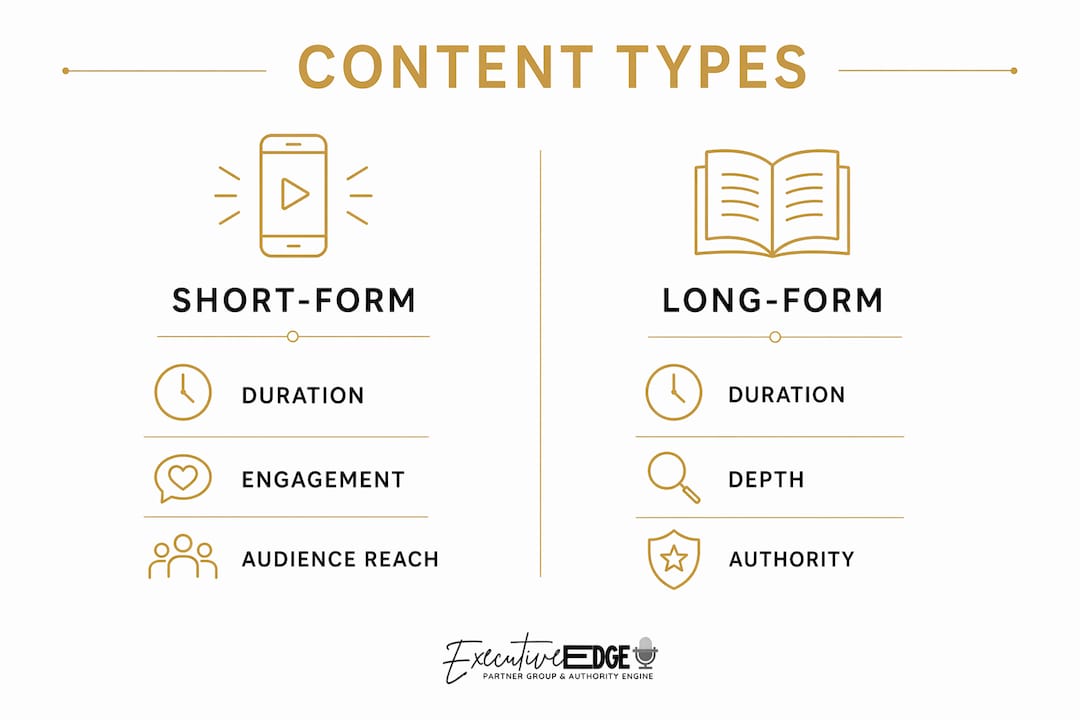
The practical implication is clear. You cannot build deep authority on short-form alone, and you cannot generate consistent new traffic on long-form alone. A long-form content strategy works best when short-form content feeds it with a steady stream of new audience members. The two formats are not competitors. They are sequential stages of the same audience journey.
How to create effective short-form content
Effective short-form content follows one rule above all others: one idea per piece. Trying to cover multiple points in 30 to 60 seconds produces content that feels rushed and leaves no clear memory. Every strong short-form piece is built around a single claim, emotion, or question.
The hook is everything. Videos under 60 seconds need to capture attention within the first two to three seconds or the viewer scrolls away. The hook does not have to be dramatic. It can be a bold statement, a surprising fact, a direct question, or a visual that creates immediate curiosity.
Beyond the hook, the most effective short-form content shares these characteristics:
- High information density. Every second carries weight. Cut any moment that does not serve the single idea you are communicating.
- Platform-native format. Vertical video for TikTok, Reels, and Shorts. Square or landscape for LinkedIn. Text posts formatted for the platform's character limits and reading patterns.
- Authentic delivery. Audiences on short-form platforms respond to real people speaking directly to camera far more than polished, scripted productions. Authenticity outperforms production value at this format length.
- A clear next step. Even if the goal is not immediate conversion, every piece of content should point somewhere. A follow, a comment, a link in bio, or a question to answer in the next video.
Pro Tip: Repurpose long-form content by slicing one concept from a podcast episode, webinar, or blog post into a standalone short-form clip. This preserves clarity, speeds up production, and keeps your messaging consistent across platforms.
Scheduling matters as much as creation. Consistent publishing signals reliability to both algorithms and audiences. Two to four short-form pieces per week, published at consistent times, outperforms sporadic bursts of ten posts followed by silence. Tools like Buffer, Later, and Sprout Social help maintain that cadence without requiring daily manual effort.
For businesses looking to grow local brand visibility through video, the short-form format is the fastest path to organic reach without paid media dependency.
Why short-form content strategy is misunderstood
Most businesses approach short-form content with the wrong expectation. They publish three videos, see no immediate sales, and conclude the format does not work. That conclusion misreads how the format functions.
Short-form content is not a closing tool. It is a trust-building mechanism. The business value of short-form content comes from repeated touchpoints over time, not from a single viral clip. A viewer who sees your content five times across two weeks knows you exist, recognizes your face or brand, and is far more likely to take action when they have a relevant need. That is the actual conversion path.
I have seen this play out consistently with service-based businesses and consultants. The ones who treat short-form as a long-term visibility investment, not a quick-hit advertising channel, are the ones who build real audience equity. They show up regularly, they talk about one specific thing they know well, and over months they become the recognized authority in their category. The businesses that chase virality rarely build anything durable.
The other mistake I see is treating short-form and long-form as either/or choices. They are not. A well-produced podcast episode or YouTube video gives you the raw material for ten short-form clips. That content repurposing workflow is the most efficient system I know for maintaining consistent output without burning out your team or your budget. Short-form feeds the top of the funnel. Long-form closes the loop.
For professionals and business owners who want to build authority without becoming full-time content creators, the answer is not to choose one format. It is to build a system that produces both from the same source material.
— David Domm
How Executive Edge Partner Group helps you build a short-form strategy

Short-form content works best when it is part of a deliberate system, not a random collection of posts. Executive Edge Partner Group builds done-for-you content systems that transform your expertise into consistent short-form and long-form content published across the platforms where your audience actually spends time. From short-form video clips to full authority campaigns, the Executive Edge system handles strategy, production, and distribution so you can focus on running your business. If you are a consultant, service provider, or local business owner ready to build real visibility, this is where to start.
FAQ
What is the short-form content definition used by marketers?
Short-form content is digital media, typically video under 60 seconds or written posts under a few hundred words, designed to deliver a single idea quickly on mobile platforms. Platforms like TikTok, Instagram Reels, and YouTube Shorts are the primary distribution channels.
How does short-form video content differ from long-form?
Short-form video targets new audience discovery through algorithmic reach and runs under 3 minutes, while long-form content runs 10 or more minutes and focuses on deepening relationships with existing audiences. Most effective marketing strategies use both formats together.
What are the best examples of short-form content?
TikTok videos, Instagram Reels, YouTube Shorts, Facebook Reels, social media captions, and Twitter/X threads are the most widely used examples of short-form content in marketing today.
Why should businesses use short-form content marketing?
37% of consumers discover new products through short-form video, making it one of the most cost-effective formats for brand awareness and funnel entry without paid advertising.
What is micro-content and how does it relate to short-form?
Micro-content refers to the smallest individual content units, such as a single quote graphic or a 15-second clip, and sits within the broader short-form content category. All micro-content is short-form, but not all short-form content qualifies as micro-content.