
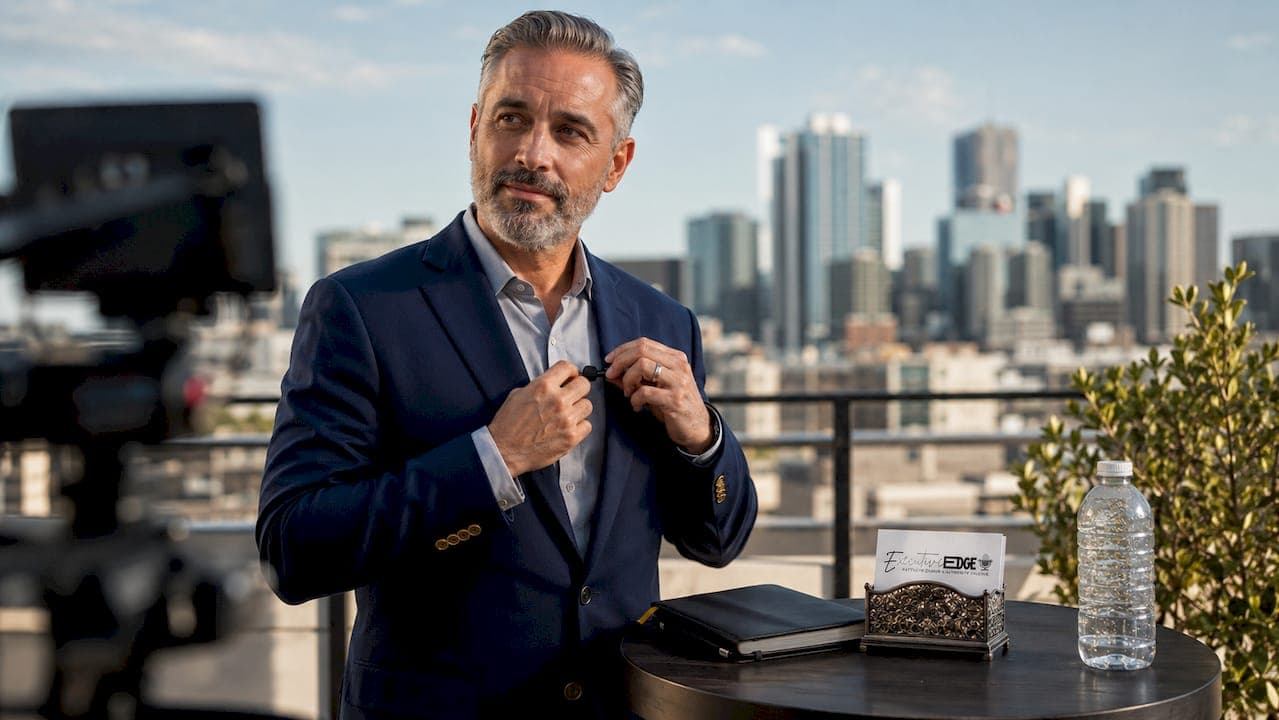
Executive YouTube content is defined as utility-focused, decision-driven video designed to help viewers make better professional choices while positioning the creator as a credible authority. This is not general thought leadership or brand awareness fluff. The best examples of executive YouTube content treat each video as a structured briefing: one clear decision, concrete evidence, and a defined next step. CNBC's Leaders Playbook series, featuring candid conversations with CEOs like Neal Mohan of YouTube, demonstrates exactly what this looks like at scale. For executives and entrepreneurs in Tyler, Texas and beyond, this format is the fastest path to building genuine online authority without becoming a full-time content creator.
1. What are the most effective formats for executive YouTube content?

Executive YouTube video ideas fall into a handful of proven formats, and choosing the wrong one wastes both your time and your audience's attention. The format that consistently outperforms is the executive briefing style: a video structured around a single viewer decision, built on a three-part spine of top-line takeaway, supporting evidence, and a clear next action. This format works because it aligns with how decision-makers actually consume information. They are not watching for entertainment. They are watching to resolve a specific question.
The other formats worth knowing:
- Candid interview series. Structured around leadership execution and strategic decision-making, not generic inspiration. CNBC's Leaders Playbook is the benchmark here.
- Short-form executive clips. Derived from longer interviews or briefings, these open with a consequence-first hook and deliver one proof point before wrapping. They work across LinkedIn, YouTube Shorts, and Instagram Reels.
- Product or service demos. High-value for consultants and service-based executives who need to show, not just tell, how their methodology works.
- Thought leadership talks. Closer to a keynote format. Best used when you have a contrarian position or a framework no one else is articulating.
Pro Tip: Before you record anything, write one sentence that names the decision your viewer will be better equipped to make after watching. If you cannot write that sentence, the video is not ready to produce.
2. Examples of top executives and channels using YouTube effectively
The clearest benchmark for best CEO YouTube content is CNBC's Leaders Playbook. The series airs weekly and frames executive conversations around leadership execution and strategic decision-making rather than surface-level career advice. Neal Mohan's episode, which aired January 28, 2026, focused specifically on leading in the age of AI. That specificity is the point. The episode does not ask "what is your leadership philosophy?" It asks how Mohan makes decisions under conditions of rapid technological change. That distinction separates authority content from filler.
"The best executive content on YouTube is not about the executive. It is about the decision the viewer needs to make next." This is the editorial standard CNBC applies to every Leaders Playbook episode, and it is the standard every executive creator should apply to their own channel.
What makes these channels work as leadership content examples:
- Decision-specific framing. Every episode or video answers a concrete question, not a vague theme.
- High production quality paired with candid delivery. The combination signals both competence and authenticity.
- Consistent publishing cadence. Weekly or bi-weekly schedules build audience expectation and search discoverability.
- Cross-platform clip strategy. Long-form interviews are cut into short clips that drive traffic back to the full episode.
The lesson for new executive creators is direct: do not start a channel until you can name the specific decisions your audience faces. Channels that grow professional influence on YouTube do so by serving a defined audience with a defined problem, not by broadcasting general expertise.
3. How to structure executive YouTube videos for maximum retention
Executive videos perform best when each segment targets a single viewer decision or concrete next step. This prevents content sprawl, the single biggest reason executive videos lose viewers in the first 90 seconds. The structure is not complicated, but it requires discipline.
Follow this three-part briefing spine for every video:
- Top-line takeaway first. State the conclusion in the opening 15 seconds. Do not build to it. Viewers who get the answer early stay to understand the reasoning. Viewers who have to wait for the answer leave.
- Evidence and examples in the middle. Use concrete stats, real scenarios, or a brief demo as proof. Executive briefings in professional contexts target 300 to 500 words per item, with each point answering what happened, why it matters, and what to do next. Apply the same logic to video segments.
- Clear call to action at the close. Name the next step explicitly. "Subscribe for weekly briefings on X" is stronger than a generic "like and subscribe." The action should connect directly to the decision the video addressed.
Pro Tip: Write your video title and opening sentence before you script anything else. If the title does not name a specific decision or outcome, rewrite it. Titles like "Leadership Lessons from 20 Years in Business" lose to titles like "How to Decide When to Promote vs. Hire Externally."
Two additional structural rules that separate high-retention executive videos from low-retention ones: keep introductions under 20 seconds, and avoid acronym stacking. Great executive clips use captions to reinforce key messages and open with consequence-first hooks that remove corporate fluff immediately. The viewer should feel the relevance of the topic within the first sentence.
4. Production quality essentials for executive YouTube content
Production quality signals executive competence and trustworthiness on YouTube more than the actual camera quality. A $500 camera with proper lighting and a dedicated microphone will outperform a $3,000 camera with poor audio every single time. This is the most counterintuitive production truth for executives who assume gear is the primary variable.
The non-negotiable production elements:
- Lighting setup. Face a natural window directly rather than having it behind you. A window behind you creates a silhouette. For controlled environments, use a two-point lighting setup with a key light positioned roughly 45 degrees above eye level and a fill light on the opposite side to reduce shadows.
- Dedicated microphone. Built-in laptop and webcam microphones pick up ambient room noise and reduce perceived credibility immediately. A USB condenser microphone like the Blue Yeti or a lavalier mic like the Rode Wireless GO II resolves this for under $200.
- Background and environment. A clean, uncluttered background with one or two intentional visual elements (a bookshelf, a branded backdrop) reads as professional. A messy or distracting background pulls attention away from the message.
- Stable framing. Eye-level camera placement with the subject filling roughly 60 to 70 percent of the frame is the standard for talking-head executive videos. Looking down into a laptop camera communicates the opposite of authority.
Pro Tip: Record a 60-second test clip before every session and watch it back with headphones. If you can hear room echo, air conditioning, or keyboard noise, fix it before you record the full video. Audio problems that seem minor during recording become distracting on playback.
5. Comparing executive YouTube content types: which is best for your goals?
Not every executive needs the same format. The right choice depends on your audience, your production capacity, and the specific outcome you are trying to drive. Use this comparison to match format to goal:
| Content type | Best for | Production effort | Engagement level | Key risk |
|---|---|---|---|---|
| Executive briefing video | Thought leadership, SEO | Low to medium | High (decision-focused) | Drifting into vague commentary |
| Candid interview series | Brand authority, network building | Medium to high | Very high | Inconsistent guest quality |
| Short-form clips | Cross-platform reach, audience growth | Low (repurposed) | Medium to high | Losing context without full video |
| Product or service demo | Lead generation, conversion | Medium | High (intent-driven) | Coming across as a sales pitch |
| Executive vlog or day-in-the-life | Humanizing the brand | Low | Medium | Appearing unfocused or self-indulgent |
Briefing-style videos and candid interviews are the two formats most aligned with YouTube channels for executives who want to build long-term authority. Short-form clips work best as a distribution layer on top of longer content, not as a standalone strategy. For executives in service-based industries like consulting, law, or real estate, the demo format converts at a higher rate because it shows methodology rather than just describing it. Understanding short-form content strategy helps you decide when clips amplify your message and when they dilute it.
What I have learned from watching executives get YouTube wrong
I have worked with enough executives and business owners to say this plainly: most executive YouTube channels fail not because of bad production or poor strategy. They fail because the creator never committed to a specific audience problem. They start with "I want to share my experience" instead of "I want to help a specific person make a specific decision." Those are fundamentally different orientations, and viewers can feel the difference within 30 seconds.
The executives who build real authority on YouTube treat every video like a client briefing. They name the problem, deliver the answer, and respect the viewer's time by cutting everything else. I have seen this approach work for consultants, attorneys, and entrepreneurs across East Texas and beyond. The ones who struggle are almost always the ones who equate more content with more authority. Consistency matters, but only if each video earns its place by serving a defined decision.
The other thing most articles will not tell you: production quality is a credibility signal, not a vanity metric. When your audio is clean and your lighting is professional, viewers unconsciously assign you more expertise. That is not superficial. That is how human trust works. Invest in a decent microphone before you invest in a second camera.
— David Domm
How Executive Edge Partner Group helps executives build YouTube authority
Executive Edge Partner Group works with business owners, consultants, and executives who want to build genuine authority on YouTube without spending their week in front of a camera. The system handles content strategy, video structure, production guidance, and multi-platform distribution so your expertise reaches the right audience consistently. If you are serious about building a YouTube presence that drives real business outcomes, not just views, the Executive Edge Authority Engine is built for exactly that. It combines strategic content planning with professional production standards designed for executives who have expertise worth sharing and audiences worth reaching.
FAQ
What is executive YouTube content?
Executive YouTube content is utility-focused, decision-driven video that positions a business leader as a credible authority by addressing specific viewer decisions rather than delivering general commentary. The format prioritizes a clear takeaway, supporting evidence, and a defined next step.
How long should an executive YouTube video be?
Most executive briefing-style videos perform well between 5 and 12 minutes. Short enough to respect viewer time, long enough to deliver a complete argument with evidence. Short-form clips derived from longer videos should run 60 to 90 seconds.
Do I need expensive equipment to start?
No. Proper lighting and audio matter more than camera quality. A dedicated USB microphone and correct window light orientation will produce more credible results than an expensive camera with built-in audio and poor lighting.
What makes CEO YouTube content different from regular content?
The best CEO YouTube content is structured around leadership execution and strategic decision-making, not general inspiration. CNBC's Leaders Playbook is the clearest example: every episode addresses how a specific executive makes decisions under specific conditions.
How often should executives post on YouTube?
A consistent weekly or bi-weekly schedule outperforms sporadic high-volume publishing. Audience retention and discoverability both improve when viewers can predict when new content will appear.