

Professional influence on YouTube is defined as the measurable authority a person or brand builds through consistent, expert-driven content that earns trust, drives engagement, and shapes purchasing decisions within a specific niche. To grow professional influence on YouTube, you need more than a camera and a posting schedule. You need a documented system that aligns your expertise with platform mechanics, audience search behavior, and community interaction. Tools like YouTube Studio, TubeBuddy, and Google Analytics are the operational backbone of that system. The US Chamber of Commerce confirms that clear goals, strong SEO, and community interaction are the three pillars of YouTube authority for professionals. For business owners in Tyler and East Texas, this platform represents one of the most cost-effective ways to build lasting credibility with a local and national audience simultaneously.
How to grow professional influence on YouTube from the ground up
Every high-authority YouTube channel starts with decisions made before the first video is ever filmed. The channel name, niche, visual identity, and metadata structure either signal credibility or undermine it from day one.
Start by defining your niche with precision. "Business advice" is not a niche. "Cash flow strategies for construction contractors" is. The narrower your focus, the faster YouTube's algorithm learns who to show your content to, and the faster your audience self-selects. Your channel description, banner, and profile image should all reinforce that single, specific positioning.
Here is what the setup phase must include:
- Channel name and handle: Match your professional brand name exactly. Consistency across LinkedIn, Instagram, and YouTube signals authority to both algorithms and viewers.
- Channel art and logo: Use consistent brand colors and typography. Canva and Adobe Express both offer professional templates sized for YouTube's 2560 x 1440 pixel banner requirement.
- About section: Write this like a positioning statement, not a bio. State who you help, what problem you solve, and why you are qualified. Include your primary keyword naturally.
- Channel trailer: A 60 to 90 second video that speaks directly to new visitors. Tell them exactly what they will gain by subscribing.
- Playlists: Organize videos into topic clusters from the start. This improves session time and signals topical depth to YouTube's ranking system.
Pro Tip: Research your audience's actual search language using TubeBuddy's keyword explorer before writing a single title or description. The words your audience types into YouTube are rarely the words professionals use internally.
The cross-platform identity consistency that reinforces authority is not accidental. It is the result of deliberate branding decisions made at setup, not patched in later.

How to develop a content strategy that builds authority
A content strategy that builds authority operates on two parallel feedback loops. The first loop uses search-optimized Help content to attract new viewers through discovery. The second uses Hub content to retain subscribers and deepen trust over time. Managing both loops is what separates channels that plateau from channels that compound.
The recommended content split for professionals is:
- Help videos (60 to 70% of output): These are evergreen, search-driven videos that answer specific questions your audience is already typing into YouTube. Examples include "how to read a profit and loss statement" or "what to ask before hiring a contractor." These videos build search equity over months and years.
- Hub videos (20 to 30% of output): These are series-based or recurring format videos designed for existing subscribers. Think weekly Q&A sessions, case study breakdowns, or behind-the-scenes process videos. They reward loyalty and increase watch time.
- Hero videos (5 to 10% of output): These are high-production, broad-appeal videos designed for reach spikes. A well-timed Hero video can introduce your channel to an entirely new audience segment.
| Content Type | Primary Goal | Posting Frequency | Example Format |
|---|---|---|---|
| Help | Search discovery | 2 to 3x per month | Tutorial, FAQ, How-to |
| Hub | Subscriber retention | 1 to 2x per month | Series, Case study |
| Hero | Reach and awareness | 1 to 2x per quarter | Trend piece, Collaboration |
Planning 12 weeks ahead with documented content pillars and monthly KPI reviews is what separates professionals who grow from those who stall. Batch filming three to four videos in a single production session reduces the cognitive load of constant content creation and protects consistency during busy periods.
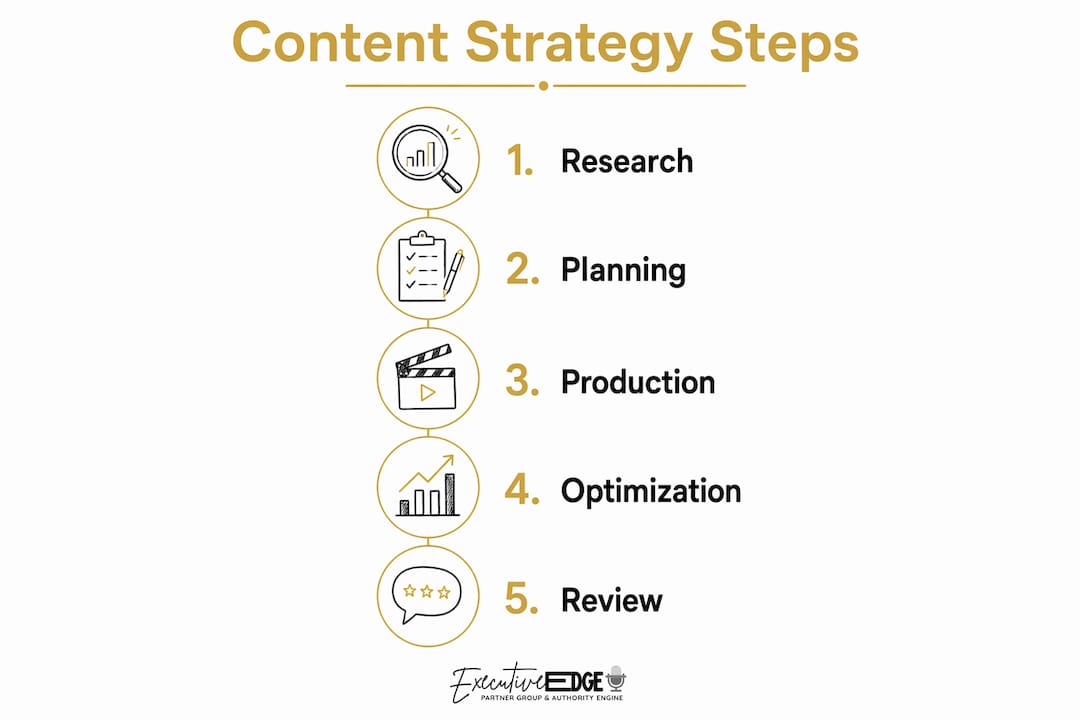
Pro Tip: Track watch time percentage and click-through rate in YouTube Studio weekly, not monthly. Early signals on a video's first 48 hours tell you whether to promote it further or adjust the packaging.
Which video production techniques maximize visibility and retention?
YouTube ranks videos based on click-through rate and audience retention. That means the thumbnail and title must earn the click, and the video itself must deliver on the promise immediately. Both signals feed the algorithm's decision to distribute your content further.
Thumbnails that perform well share three characteristics: a single dominant visual element, high-contrast text of five words or fewer, and a clear emotional signal. A financial advisor's thumbnail showing a stressed face next to the text "Tax Mistake #1" outperforms a polished headshot with a generic title every time.
Here is what the production and packaging checklist looks like for authority-focused professionals:
- Title structure: Lead with the benefit or the problem. "How I Cut My Tax Bill by 30%" outperforms "Tax Reduction Strategies for Business Owners" because it is specific and personal.
- Video hook (first 30 seconds): State the problem, preview the solution, and give the viewer a reason to stay. Never open with your name, your logo, or a thank-you for watching.
- Script structure: Use a problem-agitate-solve framework. Define the problem, make it feel real, then deliver the answer in a clear sequence.
- End screens and cards: Place end screens at the 20-second mark before the video ends. Link to the most relevant next video, not just your most popular one.
- Timestamps: Add chapter markers for any video over six minutes. This improves search snippet eligibility and viewer navigation.
| Weak Packaging | Strong Packaging |
|---|---|
| "My Thoughts on Marketing" | "3 Marketing Mistakes Killing Your Revenue" |
| Generic stock photo thumbnail | Face + bold text + contrast color |
| No hook, opens with intro music | Opens with the core problem in 10 seconds |
| No chapters | Timestamped chapters every 2 to 3 minutes |
Pro Tip: The thumbnail-title match is a trust signal. If your thumbnail shows a question and your title promises an answer, the first 30 seconds of your video must deliver that answer visibly. Viewers who feel misled leave immediately, and that exit signal damages distribution.
How can professionals use Shorts and community interaction to enhance influence?
YouTube Shorts are not a replacement for long-form content. They are a discovery mechanism. A well-structured Short introduces your expertise to viewers who would never find a 12-minute tutorial, then funnels them toward your full-length content through curiosity rather than a hard call to action.
Shorts succeed with curiosity loops, not sales pitches. A curiosity loop opens with an unresolved tension and closes it within 60 seconds. "The one question I ask every client before we start" is a curiosity loop. "Subscribe for more tips" is not. Avoid placing CTAs at the end of Shorts. That abrupt shift breaks the viewing momentum and signals low-quality content to the algorithm.
Community interaction is where authority compounds beyond what publishing frequency alone can achieve. Two-way engagement through comments and Community posts creates the kind of viewer loyalty that translates into referrals, shares, and long-term subscribers. Responding to every comment in the first 24 hours after publishing is one of the highest-return activities on the platform.
Cross-promotion multiplies the reach of every video you produce. Sharing content on LinkedIn, Instagram, and embedding in newsletters reinforces your professional authority across platforms and drives traffic back to YouTube. Live streaming adds another layer, giving your audience direct access to your thinking in real time, which builds trust faster than any edited video can.
Pro Tip: Pin a comment on every new video within the first hour of publishing. Ask a specific question related to the video topic. This seeds the comment section with engagement and signals to YouTube that the video is generating conversation.
What ongoing practices sustain YouTube influence over time?
Building YouTube authority is not a sprint. The professionals who build lasting influence treat their channel like a product with a documented operating system, not a creative project they manage by feel.
Here is the monthly maintenance framework that produces compounding results:
- KPI review: Pull data from YouTube Studio on watch time, subscriber growth, click-through rate, and top-performing videos. Identify one pattern to replicate and one to eliminate.
- Content calendar update: Adjust the next 12-week plan based on what the data shows. If a Help video on a specific topic outperformed expectations, create a follow-up or a Hub series around that topic.
- Partnership outreach: Identify two to three professionals in adjacent niches for potential collaborations. Podcast swaps, co-hosted videos, and guest appearances expand your audience without requiring new content from scratch.
- Media kit update: Keep a current one-page media kit that documents your channel metrics, audience demographics, and collaboration formats. This formalizes your authority and makes brand partnerships easier to close.
- Burnout audit: Review your production workflow for friction points. If filming, editing, and publishing takes more than four hours per video, the process needs restructuring, not more willpower.
Documenting content pillars and reviewing analytics monthly is the operational discipline that separates channels with 500 subscribers from channels with 50,000. The content is rarely the differentiator. The system is.
What I have learned about building real authority on YouTube
I have worked with enough professionals and entrepreneurs to know that the biggest obstacle to YouTube authority is not technical. It is the belief that the channel needs to be perfect before it can be taken seriously. That belief costs people months of momentum they will never recover.
The professionals who build genuine influence on YouTube share one trait: they publish before they feel ready, then improve based on real data. A consultant in East Texas with 200 subscribers who answers one specific question better than anyone else on the platform will outperform a polished channel with no clear point of view every single time. 79% of U.S. YouTube viewers trust creator recommendations, and that trust is earned through specificity and consistency, not production value.
The other mistake I see constantly is chasing vanity metrics. Subscriber count is a lagging indicator. Watch time, comment quality, and direct inquiries from viewers are the real signals that your authority is growing. I have seen channels with 1,200 subscribers generate six-figure consulting pipelines because the content was precise, credible, and built for a specific audience.
Patience is not passive. It means publishing consistently, reviewing data honestly, and adjusting without abandoning the strategy. The authority-building process at Executive Edge Partner Group is built on exactly this principle: documented systems, not creative sprints.
— David Domm
How Executive Edge Partner Group helps you build YouTube authority
Growing a YouTube channel that actually builds your professional reputation takes more than good intentions. It takes a documented content system, consistent production, and a clear understanding of how the platform rewards authority over time. Executive Edge Partner Group works with business owners, consultants, and professionals who want to build real authority online without becoming full-time content creators. The Authority Engine system handles content strategy, SEO optimization, and multi-platform publishing so your expertise reaches the right audience consistently. If you are ready to turn your knowledge into a channel that generates trust and inbound opportunities, Executive Edge Partner Group is the place to start.
FAQ
What does it mean to grow professional influence on YouTube?
Growing professional influence on YouTube means building measurable authority in a specific niche through consistent, expert-driven content that earns viewer trust and drives business outcomes. It is defined by metrics like watch time, subscriber loyalty, and direct audience inquiries rather than raw view counts.
How often should professionals post on YouTube to build authority?
Consistency matters more than frequency. Publishing two to three well-optimized Help videos per month, combined with one Hub video for subscribers, outperforms daily uploads with no strategic focus. Planning 12 weeks ahead with a documented content calendar is the standard for sustainable growth.
What is the Help, Hub, Hero content framework?
The Help, Hub, Hero framework is a content mix strategy where 60 to 70% of videos target search discovery, 20 to 30% retain existing subscribers through recurring formats, and 5 to 10% are high-production reach videos. This split sustains both audience growth and viewer loyalty simultaneously.
Do YouTube Shorts help professionals build credibility?
Yes, when used correctly. Shorts built around curiosity loops that deliver educational or entertaining value introduce your expertise to new audiences without requiring long-form production. Avoid placing sales calls to action at the end of Shorts, as this reduces watch completion and algorithmic distribution.
What metrics actually indicate growing YouTube authority?
Watch time percentage, click-through rate, and comment quality are stronger indicators of growing authority than subscriber count alone. YouTube's algorithm uses CTR and average view duration as the primary signals for distributing content to new audiences, making these the metrics worth optimizing first.