

Voice cloning for content is the process of using AI to create a digital replica of a human voice from a short audio sample, then generating new speech from written scripts without any additional recording. Platforms like ElevenLabs and Descript have made this technology accessible to solo creators and marketing teams alike. Training samples range from 10 seconds for an instant clone to several minutes for a high-realism professional model. At roughly $22 per month for a creator tier, the barrier to entry is lower than hiring a single voice actor for one project. For business owners in Tyler and East Texas looking to scale their content without scaling their studio time, this technology changes the math entirely.
What is voice cloning for content creation?
Voice cloning, also called AI voice synthesis or neural voice replication, is the industry-recognized term for what most creators now simply call "cloning your voice." The process captures your unique vocal identity and converts it into a model that generates new audio from text. This is distinct from standard text-to-speech, which uses a generic synthetic voice with no personal identity attached.
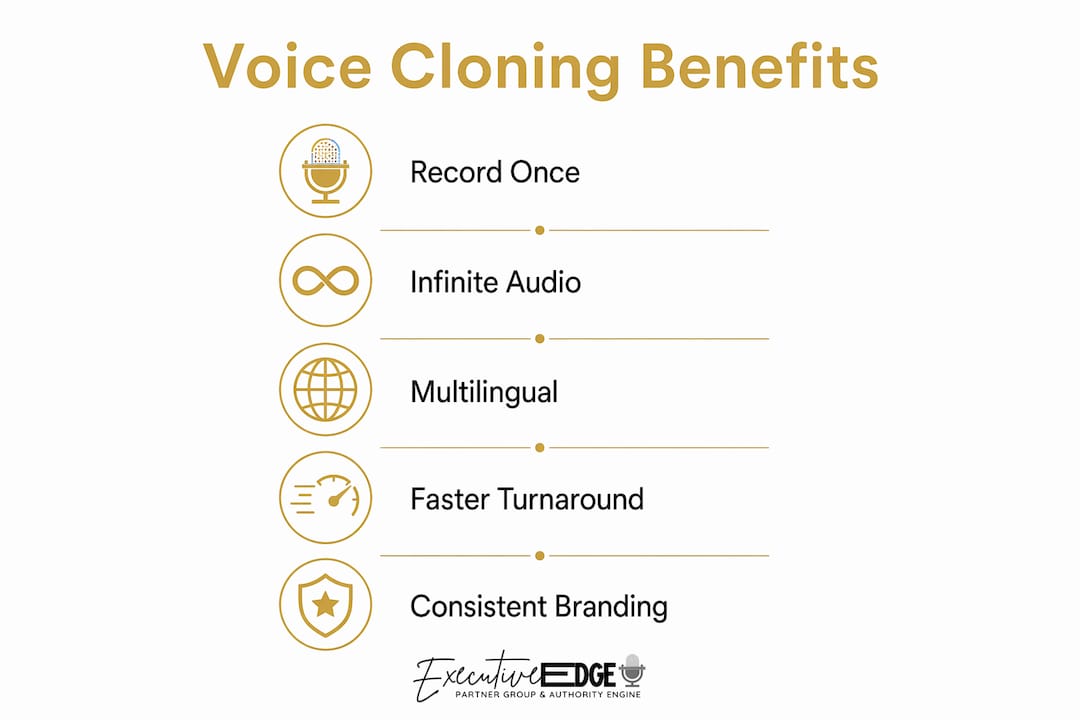
The core value is simple. You record once, and the model speaks for you indefinitely. Your podcast intro, your YouTube ad read, your email newsletter audio version, and your Spanish-language social clip can all carry your voice without you sitting in front of a microphone for each one. That is what makes voice cloning a genuine production tool rather than a novelty.
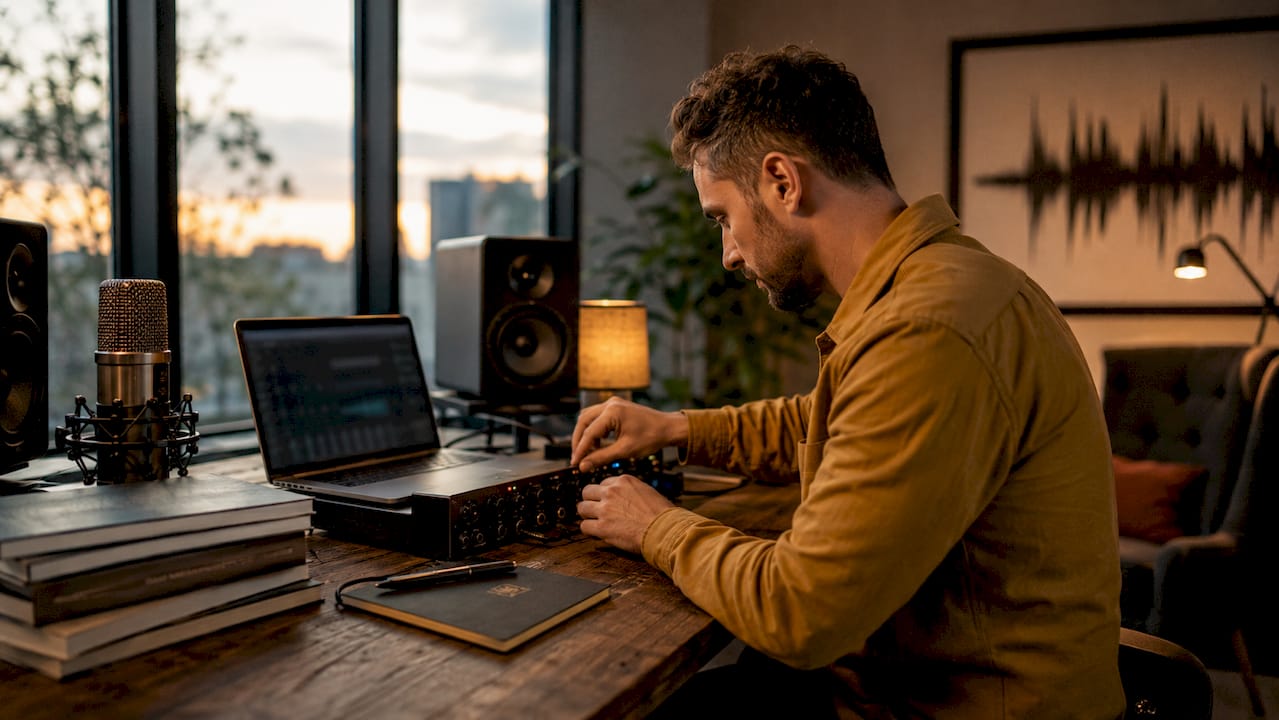
The standard industry term for the underlying process is audio synthesis, specifically neural audio synthesis. Understanding that term helps you evaluate platforms, read documentation, and speak credibly with developers or agencies about your content stack.
How does voice cloning technology work?
Deep neural networks analyze vocal features including tone, pitch, cadence, and breath patterns from your audio samples. The model does not simply record and replay your voice. It learns the rules of how your voice behaves and applies those rules to any new text you feed it.
Here is what the process looks like in practice:
- Sample collection: You upload a clean audio recording, anywhere from 10 seconds to a few minutes depending on the platform and quality tier you need.
- Model training: The neural network processes your sample and builds a voice profile that captures your unique characteristics.
- Text-to-speech synthesis: You paste or type a script, and the model generates audio that sounds like you reading it aloud.
- Emotional nuance and prosody: Advanced platforms let you specify tone, such as confident, warm, or urgent, so the output matches the context of your content.
The difference between voice cloning and traditional text-to-speech is significant. Traditional TTS gives you a robotic, generic voice. Voice cloning gives you your voice, with your natural rhythm and personality intact.
Pro Tip: Record your training sample in a quiet room with no reverb, no background noise, and no audio processing applied. Uploading processed or noisy samples adds digital artifacts that the model amplifies in every output file. Raw, dry audio is always the right starting point.
What are the main benefits of voice cloning for content creators?
The benefits of voice cloning for content creation go well beyond convenience. They change the economics and velocity of audio production.
- Output scaling. Creators can scale content output by up to 10x using voice cloning because they eliminate the recording bottleneck entirely. That means a weekly podcast schedule becomes a daily one without burning out.
- Brand voice consistency. Your audience hears the same voice across every channel, every format, and every language. Voice cloning supports consistent vocal identity across 70+ languages, which is critical for brands expanding into new markets.
- Cost reduction. A creator tier on ElevenLabs costs about $22 per month for 100,000 characters of audio generation. Hiring a professional voice actor for the same volume of content would cost hundreds to thousands of dollars.
- Multilingual localization. You can produce Spanish, French, or Portuguese versions of your content while preserving your intonation and tone. Your audience in another country hears your voice, not a stranger's.
- Faster turnaround. Text-first workflows mean you write a script, generate audio, and publish. No scheduling a recording session, no editing out stumbles, no waiting on a contractor.
- Voice as a brand asset. Treating voice cloning as brand infrastructure rather than a one-off tool improves scalability and operational consistency across every channel you publish on.
The compounding effect matters here. Each of these benefits reinforces the others. Faster turnaround plus multilingual output plus lower cost equals a content operation that punches well above its weight.
What ethical and practical considerations apply to voice cloning?
Voice cloning is powerful, and that power comes with clear responsibilities. Getting these right protects your audience relationship and your legal standing.
- Clone only voices you own or have explicit permission to use. Cloning another person's voice without consent violates ethical standards and, in many jurisdictions, the law. This applies to celebrities, competitors, and even colleagues.
- Disclose AI-generated content. Transparency about AI-generated voice content is the standard expectation in 2026. A simple label in your show notes or video description is enough. Hiding it erodes trust faster than any production shortcut saves time.
- Avoid pre-processed audio samples. Uploading audio with compression, EQ, or noise reduction applied degrades your model. Always use raw recordings.
- Configure your voice model for each channel. IVR systems need clarity and low latency while social video content benefits from expressive, high-fidelity output. One voice model configured for all channels produces mediocre results on each.
- Recognize the limitations. Voice cloning is not suited for live or spontaneous conversational content as of 2026. It works best for scripted segments where you can specify emotional tone in advance.
Pro Tip: When the generated audio mispronounces a word or sounds unnatural, do not re-record. Edit the text script instead. Adjust spelling, add punctuation, or break the sentence differently. Fixing scripts and regenerating specific segments is faster than any waveform editing workflow.
How does voice cloning fit into a modern content workflow?
The biggest mindset shift voice cloning demands is moving from recording-first to text-first production. Most creators think of audio as something you capture. Voice cloning makes audio something you generate, which changes every step of your production process.
Practical applications across content formats
| Content Format | Voice Cloning Application | Primary Benefit |
|---|---|---|
| Podcast | Batch-generate intros, outros, and ad reads | Eliminates repetitive recording sessions |
| YouTube | Produce multilingual dubbed versions | Expands audience reach without re-filming |
| Social video | Generate short-form narration from scripts | Speeds up clip production significantly |
| Email newsletters | Create audio versions of written content | Adds a new consumption format instantly |
| Paid ads | Test multiple script variations quickly | Reduces production cost per ad variation |
Batch generation is where the content velocity gains become real. Instead of recording one intro at a time, you write 10 intros, generate all 10 in a single session, and schedule them across the month. The same logic applies to promotional clips, highlight reels, and call-to-action segments.
Voice cloning removes repetitive recording tasks so creators can focus on strategy and ideation. That is the real return on investment. The hours you recover from re-recording and audio editing go back into content planning, audience research, and creative development.
For teams managing podcast production at scale, voice cloning also integrates with video workflows. Understanding how video cloning technology works alongside audio synthesis gives you a complete picture of where AI-assisted content production is heading.
Voice cloning is a tool, not a shortcut to authenticity
I have watched a lot of creators adopt voice cloning the wrong way. They treat it as a way to produce more content faster, full stop. That framing misses the point and eventually backfires.
The creators and businesses getting real results from this technology treat their cloned voice as a managed brand asset. They record a high-quality training sample, configure the model carefully for each platform, and audit outputs regularly to make sure the voice still sounds like them. They also tell their audiences. Every time I see a creator hide the fact that their content uses AI-generated audio, I know they are building on a foundation that will crack.
The other thing I have learned is that voice cloning does not make bad content sound better. It scales whatever you already produce. If your scripts are weak, you will produce weak content faster. The technology rewards creators who have already done the hard work of developing a clear voice, a defined audience, and a consistent message.
For businesses in East Texas and beyond, the competitive opportunity is real. Most local competitors are still recording everything manually or skipping audio content altogether. A well-configured voice clone lets you publish consistently across channels at a fraction of the time cost. That consistency compounds into authority over months, not years.
The future of this technology points toward real-time interaction capabilities, but we are not there yet for most practical use cases. What exists today is already more than enough to transform how a focused creator or business operates.
— David Domm
How executive edge partner group helps you scale with voice technology
If you are a content creator, marketer, or business owner ready to put voice cloning to work, strategy matters as much as the technology itself.
Executive Edge Partner Group builds done-for-you content systems that incorporate AI voice tools, strategic content planning, and multi-platform publishing into a single, managed workflow. The goal is not just to produce more content. It is to build the kind of consistent, authority-driven presence that makes your business the obvious choice in your market. Whether you are starting from scratch or looking to scale what you already have, explore what Executive Edge offers and see how voice cloning fits into a complete content strategy built around your brand.
FAQ
What is voice cloning for content in simple terms?
Voice cloning for content is an AI process that learns your voice from a short audio sample and generates new speech from written scripts. It lets creators produce audio content at scale without recording every piece manually.
How much audio do i need to train a voice clone?
Training samples range from 10 seconds for an instant clone to several minutes for a high-realism professional model. Higher-quality models require longer, cleaner samples recorded in quiet environments.
Is ai-generated voice content legal to publish?
Publishing AI-generated voice content using your own voice is legal in most jurisdictions. Cloning another person's voice without explicit permission is both an ethical violation and a legal risk in many regions.
Can voice cloning handle multiple languages?
Yes. Platforms like ElevenLabs support consistent vocal identity across 70+ languages, allowing creators to localize content while preserving their original tone and intonation.
What content types work best with voice cloning?
Voice cloning works best for scripted formats like podcast episodes, YouTube narration, ad reads, and social video clips. It is not suited for live or spontaneous conversational content as of 2026.