
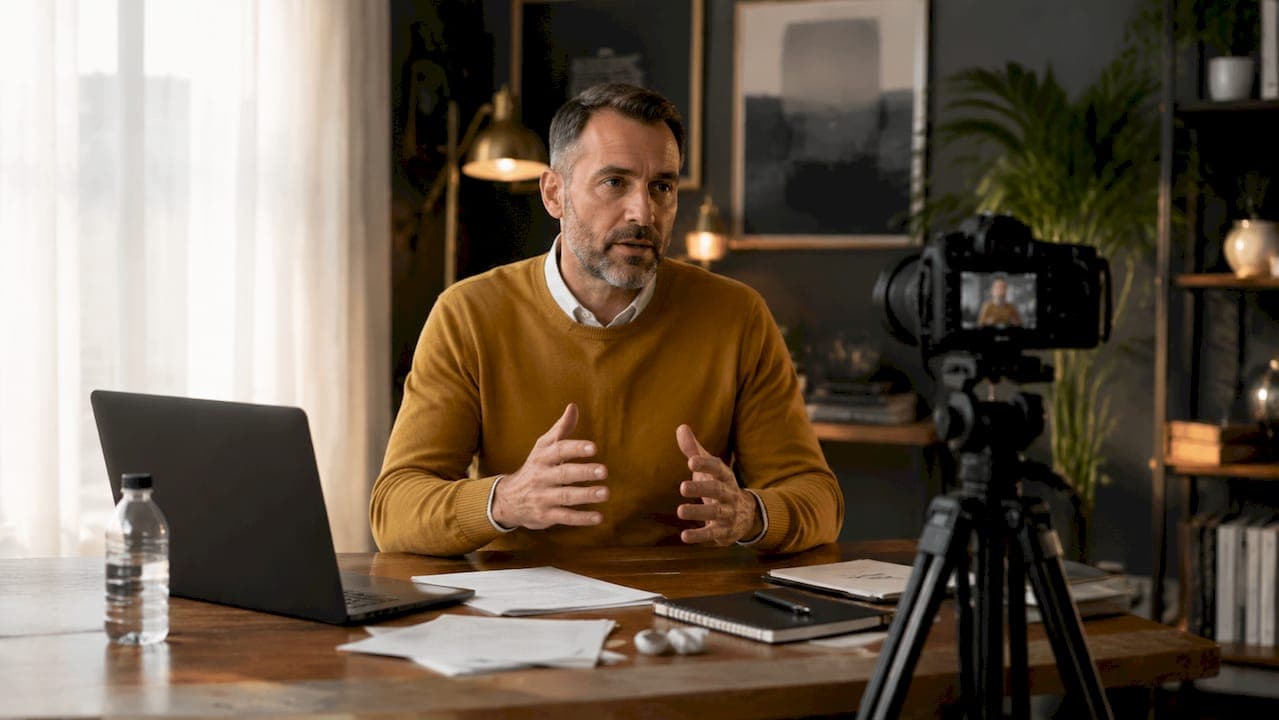
Executive video authority content is defined as on-camera content produced by business leaders to build credibility, trust, and influence with their audiences. The industry term for this practice is "executive thought leadership video," and the benefits of video authority content executives pursue are measurable and compounding. According to Wyzowl, 91% of businesses now use video marketing, with 92% reporting positive ROI and an average return of $4.20 per dollar spent. That number tells you this is not an experimental tactic. It is a proven growth channel. Business leaders in Tyler, Texas and across East Texas are beginning to recognize what top executives in major markets already know: consistent, authentic video presence builds the kind of trust that no press release or email campaign can replicate.
1. benefits of video authority content executives use to build trust
Executive video content builds trust faster than any other content format because it puts a real person in front of the audience. Text and graphics can communicate facts. Video communicates character. When a CEO or senior leader speaks directly to camera, viewers assess credibility, confidence, and authenticity in real time.
Haikai Media makes a critical distinction here: being "good on camera" is not about polish or production value. It is about having a genuine perspective and the clarity to share it. Executives who try to perform for the camera consistently underperform those who simply speak from real experience.
"Authenticity is not a style choice. It is the mechanism by which trust is transferred through video."
The data supports this. Authentic CEO videos generated 200% higher engagement than studio-produced versions, and 85% of viewers say they favor authenticity over production quality. That is a decisive finding. It means the barrier to entry for executive video is lower than most leaders assume.
Pro Tip: Record your first video in a quiet room with natural light and speak as if you are explaining something to a trusted colleague. Skip the teleprompter. The slight imperfection is what makes it believable.

2. video drives measurable business outcomes
The business case for executive video is not built on brand sentiment alone. The numbers on reach, engagement, and conversion are concrete. Including video in landing pages or communications increases click-through rates by 200–300% and boosts engagement by 43%. Those are not marginal improvements. They represent a fundamental shift in how audiences respond to content.
| Metric | With Executive Video | Without Video |
|---|---|---|
| Click-through rate lift | 200–300% | Baseline |
| Audience engagement | +43% | Baseline |
| Google first-page likelihood | 53x more likely | Baseline |
| Average marketing ROI | $4.20 per $1 spent | Varies by channel |
| LinkedIn reach (CEO vs. company page) | 5–10x higher | Baseline |
Websites that include video are 53 times more likely to appear on Google's first page. The reason is dwell time. Visitors stay longer on pages with video, and Google interprets that as a signal of quality. For executives who want their name and company to appear in search results, video is one of the most direct paths to that outcome.
LinkedIn amplifies this effect further. CEO videos on LinkedIn reach 5–10 times the audience of company page posts. The platform's algorithm favors personal profiles, which means an executive posting video directly from their own account will consistently outperform the same content posted from the brand page.
Pro Tip: Mix your video types. Timely commentary on industry news, short lessons from recent projects, and brief behind-the-scenes moments each attract different segments of your audience and keep your feed from feeling repetitive.
3. executive video strengthens internal culture
The impact of executive video is not limited to external audiences. Internal communication is one of the most underused applications of this format. Executive video builds 35% higher employee morale and reduces reputational damage by 50% during crises. Both figures point to the same underlying dynamic: employees trust leaders they can see and hear.
Text-based memos and company-wide emails feel distant. A short video from the CEO explaining a strategic shift, acknowledging a difficult quarter, or celebrating a team win lands differently. It signals that leadership is present and accountable. That visibility matters more during uncertainty than at any other time.
The social proof created by consistent executive video also reinforces culture externally. When potential hires, partners, and clients see a leader who communicates openly and regularly, they form a stronger impression of the organization's values before any formal conversation begins.
4. video outperforms text for message retention
Viewers retain 95% of a message delivered via video compared to 10% when reading text. That gap is not a minor advantage. It means that a three-minute video from an executive communicates more effectively than a 1,500-word article covering the same topic. For leaders who want their ideas to stick, video is the superior format by a wide margin.
This retention advantage compounds across formats. An executive who publishes a video, repurposes it as a blog post, and shares clips on LinkedIn is not just reaching more people. Each format reinforces the others, and the video version anchors the message in memory. Urban Splatter's research on enterprise brand trust confirms that multiple content formats working together build cumulative credibility faster than any single channel alone.
5. personal brand video outperforms branded content
Buyers trust people more than they trust companies. This is not a new insight, but video makes it actionable at scale. When an executive speaks on camera about their philosophy, their failures, or their perspective on the industry, that content carries a weight that no branded advertisement can match.
The contrast with traditional marketing content is direct. A company video promoting a product is expected to be promotional. An executive video sharing a hard-won lesson is not. That distinction changes how the audience receives it. The message feels like advice rather than advertising, and that shift in perception drives higher buyer trust and stronger purchase intent.
For executives who want to grow professional influence on platforms like YouTube and LinkedIn, the personal brand advantage is the most durable asset they can build. Company brands change with ownership and strategy. A leader's personal reputation, built through consistent video presence, travels with them throughout their career.
6. best practices for producing authoritative executive video
Effective executive video does not require a full production crew or a broadcast studio. The practices that produce the best results are straightforward and repeatable.
-
Start with pre-production discovery. Before recording, identify the two or three core points you want to make. Haikai Media's approach to conversational scripting focuses on natural delivery rather than memorized speeches. Bullet points work better than full scripts for most executives.
-
Batch record multiple videos in one session. Shootsta's model of batch recording short videos allows executives to produce a month's worth of content in two hours. This approach fits the reality of a senior leader's schedule and removes the pressure of recording as a recurring task.
-
Prioritize consistency over production quality. Motlow Pro Media's research confirms that regular short videos build more trust than infrequent studio productions. One video per week, posted consistently, outperforms a polished quarterly release every time.
-
Keep the crew small. A single camera operator focused on good lighting and clean audio is enough for most executive video formats. Adding more people to the set increases self-consciousness and reduces the natural delivery that makes the content effective.
-
Respond quickly to current events. A short video recorded the day a major industry development breaks will outperform a carefully edited piece published two weeks later. Timeliness signals that the executive is engaged and informed, which reinforces authority.
-
Use a consistent setting. A recognizable background, whether a home office, a branded space, or a consistent outdoor location, creates visual continuity that audiences associate with the executive's personal brand over time.
Pro Tip: Post your first video before you feel ready. The executives who build the strongest video presence are not the most polished. They are the most consistent.
7. how executive video compares to other content formats
Not every communication goal calls for video, but the situations where video outperforms alternatives are clear and worth mapping.
| Format | Trust Building | Message Retention | Reach on LinkedIn | Crisis Communication |
|---|---|---|---|---|
| Executive video | High | 95% | 5–10x company page | Very effective |
| Traditional marketing video | Medium | High | Moderate | Limited |
| Press release | Low | 10% | Low | Moderate |
| Email to employees | Low | 10% | N/A | Moderate |
| Social media text post | Low | 10% | Low | Low |
Press releases and emails remain useful for formal announcements and compliance-driven communication. They are not effective for building emotional connection or trust. Executive video fills that gap directly. For internal audiences, video reduces the rumor and uncertainty that text-based communication often leaves behind. For external audiences, it creates the kind of personal connection that converts prospects into clients and clients into advocates.
The situational recommendation is simple. Use video when the goal is trust, retention, or reach. Use text when the goal is documentation or formal record. Use both when the stakes are high enough to warrant reinforcement across formats.
What i have learned about executive video after years in the field
Most executives I work with initially resist video for the same reason: they believe they need to be polished before they go on camera. That belief costs them months of momentum and, in some cases, years of compounding authority they will never recover.
The executives who build the strongest video presence are not the smoothest speakers. They are the ones willing to share a real perspective, admit a mistake, or explain something they genuinely care about. That willingness is what the camera captures, and it is what audiences respond to. No amount of production value replicates it.
The second mistake I see consistently is treating video as a campaign rather than a practice. A burst of five videos followed by three months of silence does more damage than posting nothing at all. It signals inconsistency, and audiences read inconsistency as a lack of commitment. The executives who win with video treat it the way they treat any other leadership responsibility. They show up regularly, even when it is inconvenient.
For business leaders who want to build differentiated authority in their markets, the window to establish a strong video presence is still open. The executives who start now, commit to consistency, and prioritize authenticity over perfection will own their category online within 12 months.
— David Domm
Build your executive video presence with expert support
Executive video authority content works best when it is part of a structured system, not a one-off effort. Executive Edge Partner Group helps business leaders transform their expertise into consistent, high-impact video content that builds authority across Google, YouTube, LinkedIn, and AI-driven search platforms.

Executive Edge Partner Group's done-for-you content system handles strategy, production planning, and multi-platform distribution so you can focus on delivering your message. Whether you are a consultant, attorney, or senior executive looking to build a converting brand, the system is built to scale your visibility without consuming your schedule. Visit Executive Edge Partner Group to explore how a personalized video authority strategy can position you as the recognized leader in your market.
FAQ
What are the core benefits of executive video authority content?
Executive video authority content builds trust, increases message retention, and drives measurable business outcomes including higher click-through rates and stronger search rankings. Wyzowl reports an average ROI of $4.20 per dollar spent on video marketing.
How often should executives post video content?
One video per week posted consistently outperforms multiple videos followed by silence, according to Shootsta's research on LinkedIn thought leadership programs. Consistency signals reliability to both audiences and platform algorithms.
Does video quality matter more than authenticity?
Authenticity matters more than production quality. Authentic CEO videos generate 200% higher engagement than studio-produced versions, and 85% of viewers favor genuine delivery over polished presentation.
How does executive video affect internal communication?
Executive video builds 35% higher employee morale and reduces reputational damage by 50% during crises compared to text-based communication. Employees respond more positively to leaders they can see and hear directly.
Is LinkedIn or YouTube better for executive video?
Both platforms serve different purposes. LinkedIn delivers 5–10 times the reach of company page posts for personal executive profiles, making it ideal for professional audiences. YouTube builds long-term searchable authority and is better suited for in-depth content and organic discovery over time.