
For busy executives, the best approach to podcast-driven brand building is a fully managed, done-for-you system that handles every step from recording to distribution. The Executive Edge Authority Engine, developed by David Domm, is a practical model of exactly that: a multi-platform authority system that converts a single monthly interview into a consistent stream of content across every channel that matters.
What that system delivers, at minimum:
- Weekly podcast episodes, branded and distributed to all major platforms, with show notes, transcription, and SEO/GEO/AEO optimization applied
- Repurposed short-form video clips, audiograms, LinkedIn ghostposts, blog articles, and social graphics from each recording session
For executives in Tyler and East Texas, the same system and outcomes are accessible without building an in-house production team.
Pro Tip: Block one 3-hour recording session per month. According to executive podcast production best practices, batching that single block can produce four episodes, keeping your calendar intact while maintaining a weekly publishing cadence.
Table of Contents
- What does a done-for-you podcast system actually include?
- Who benefits, and what outcomes should you expect?
- What does the onboarding and production workflow look like?
- What does pricing look like for a done-for-you executive system?
- How do you evaluate and choose the right provider?
- What does success look like, and how do you validate vendor claims?
- Why a managed system beats DIY for time-pressed executives
- The Executive Edge Authority Engine is ready when you are
- Useful sources and further reading
- FAQ
What does a done-for-you podcast system actually include?
The deliverables gap between a real DFY system and a basic editing service is significant. A full-service executive podcast and brand building system covers:
- Executive interview recording (in-person, mobile on-site, or remote)
- Audio editing with branded intros/outros, music, and filler removal
- Video recording and post-production for YouTube
- Short-form clip creation (15–90 second social cuts)
- Audiograms and social graphics
- Show notes, episode transcription, and chapter markers
- Ghostwritten blog posts and LinkedIn articles
- Episode distribution to Spotify, Apple Podcasts, YouTube, and additional platforms
- SEO, GEO (Generative Engine Optimization), and AEO (Answer Engine Optimization) applied to every asset
- Monthly analytics and performance reporting
- Raw asset delivery for internal use
Professional production standards — soundproofed recording, acoustic treatment, and tight editing — are now baseline expectations for any brand podcast that wants to signal authority. Warm, crisp audio is not a luxury; it is the floor.
The production team behind a credible system includes a strategic producer, audio/video engineer, editor, social repurposing editor, SEO/AEO specialist, and account manager. Each role is distinct, and a provider that bundles all of it into one generalist is usually cutting corners somewhere.
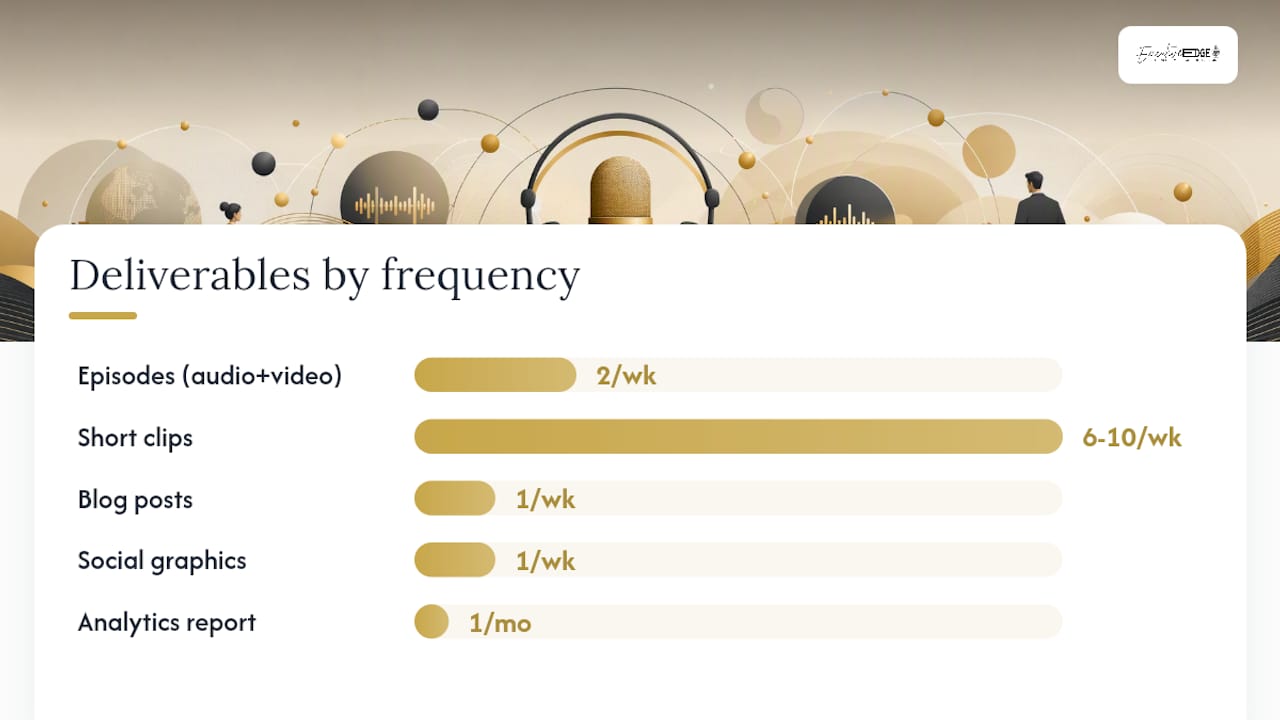
| Deliverable | Why It Matters | Typical Frequency |
|---|---|---|
| Podcast episode (audio) | Core authority asset; builds search presence | Weekly |
| Video episode (YouTube) | 43% of podcast consumption is video | Weekly |
| Short-form clips | LinkedIn/social reach and algorithm visibility | 3–5 per episode |
| Blog/LinkedIn article | SEO and long-form thought leadership | Weekly |
| Social graphics | Brand consistency across platforms | Weekly |
| Analytics report | KPI tracking and strategy adjustment | Monthly |
Most providers offer seasonal ramp options: heavier repurposing during a product launch or conference season, lighter during slower months. If a provider offers no flexibility, that is worth noting before you sign.
Who benefits, and what outcomes should you expect?
The ideal client for a done-for-you executive podcast system is someone with genuine expertise and no time to produce content. That covers C-suite executives, management consultants, agency principals, attorneys, real estate professionals, medical professionals, and local business owners who want authority without becoming full-time content creators.
Measurable outcomes executives typically see:
- Increased LinkedIn profile views and connection requests from target buyers
- Organic search traffic to show pages and blog posts
- Booked discovery calls and consultations attributed to content
- Speaking invitations from event organizers who found the podcast
- Improved recruiting results as candidates research the leader before applying
Video is particularly important here. With 43% of podcast consumption now happening via video, an audio-only strategy leaves a significant portion of the potential audience unreached.
Timeline expectations are realistic, not overnight. Most executives see measurable social impressions and early download traction within the first 30–60 days. Inbound leads and SEO-driven traffic typically build over 90–180 days as content accumulates and search engines index the full asset library. Podcast hosting builds expertise through consistency, not a single viral episode.
If you already speak at industry events, that material is a ready-made content source. Converting speaking experience into evergreen podcast and social assets is one of the fastest ways to accelerate the content calendar without additional recording time.
What does the onboarding and production workflow look like?
A well-run DFY system moves from kickoff to steady output in about three to four weeks. The phases:
Week 0 (Kickoff): Brand audit, show concept development, audience definition, episode topic planning, and technical setup (RSS feed, hosting, distribution accounts).

Weeks 1–3 (Show Design): Branded intro/outro production, cover art, show notes template, social graphic templates, and a one-page Speaker Brief the executive uses to prep for each recording.
Week 3–4 (Launch Episode): First recording session, full production cycle, and publishing across all platforms.
Ongoing (Monthly Cadence): Batch recording session, editing, review/approval, publishing, repurposing, distribution, and performance reporting.
The recurring steps per episode cycle:
- Pre-session brief and topic confirmation
- Recording (in-person, mobile on-site, or remote)
- Audio and video editing with quality review
- Executive approval round
- Publishing and platform distribution
- Short-form repurposing and social scheduling
- Monthly analytics report with next-cycle recommendations
On recording format: remote sessions (Riverside.fm, Squadcast) work well for guests and distributed teams. Mobile on-site production, where the crew comes to the executive's office, removes all travel friction and is the preferred model for time-sensitive leaders. Mobile studio sessions provide multi-camera recording and an on-site technician, so the executive shows up, talks, and leaves.
Pro Tip: Ask your producer for a one-page Speaker Brief before each session. A single page with three to five guided prompts cuts executive prep time to under 10 minutes and produces sharper, more quotable recordings.
What does pricing look like for a done-for-you executive system?
Pricing for executive podcast and brand building systems follows two main shapes: a launch fee plus monthly retainer, or per-episode pricing with optional add-ons.
Common pricing structures:
- Launch + retainer: A one-time setup fee covering show design, branding, and technical infrastructure, followed by a monthly retainer for ongoing production. Market reference packages range from roughly $3,500/month for entry-level programs to $5,000/month for expanded authority packages.
- Per-episode pricing: Starting around $450 per episode for weekly or bi-weekly production, with optional add-ons for guest booking and producer-assisted recording.
Pro Tip: Ask every provider to break out deliverable hours and distribution costs separately. A $4,000/month retainer that includes 20 hours of production and platform distribution is a different value proposition than one that covers editing only.
How do you evaluate and choose the right provider?
The best provider demonstrates a clear process, transparent deliverables, measurable KPIs, and experience coaching executives on camera and on mic. Use this checklist on every vendor call:
- Walk me through your onboarding process, step by step.
- What are the exact deliverables per episode, per month?
- Who owns the raw files, finished assets, and RSS feed?
- Which platforms do you distribute to, and how?
- How do you handle SEO, GEO, and AEO for each episode?
- What KPIs do you track, and how often do you report?
- Do you provide executive coaching or on-camera guidance?
- Who is my dedicated producer, and how do I reach them?
Red flags to watch for:
- Vague or verbal-only deliverable descriptions with no written scope
- No sample case studies or measurable client results
- Asset ownership that stays with the agency, not the client
- KPIs limited to download counts with no lead attribution
- No executive coaching or on-camera prep support
- Hidden fees for distribution, hosting, or revision rounds
Pro Tip: Before signing, request a sample 30-minute edited episode and the full repurposing plan for that single recording. A provider who cannot show you the output from one session cannot show you what a year of content looks like.
For deeper guidance on evaluating providers, David Domm's thought leader podcast strategy playbook covers show design, repurposing workflows, and the questions worth asking before committing to a system.
What does success look like, and how do you validate vendor claims?
Ask for campaign-level results framed by the KPIs you actually care about, not vanity metrics. The case study formats worth requesting:
- Before/after metrics with specific timeframes
- Sample assets (an actual edited episode and its repurposed clips)
- Client testimonial with contact information for a reference call
- Process timeline showing kickoff to steady-state output
- Attribution model explaining how leads or meetings are connected to content
KPIs to demand from any provider:
- Episode downloads and streams by platform
- Short-form clip views on LinkedIn and YouTube
- LinkedIn post engagement rates (impressions, comments, shares)
- Organic search visits to show pages and blog posts
- Number of inbound meetings or consultations attributed to content
- SEO/AEO placement improvements for target keywords
Done-for-you programs that convert one monthly interview into a constant stream of LinkedIn content demonstrate exactly the kind of asset multiplication worth verifying with raw analytics. Ask for platform-native screenshots, not PDF summaries, and request at least one client reference you can call directly.
Why a managed system beats DIY for time-pressed executives
The conventional wisdom says any executive can start a podcast with a decent microphone and a recording app. That is technically true and practically irrelevant. The real cost of DIY is not the equipment; it is the 8–12 hours per episode that disappear into editing, repurposing, scheduling, and distribution — hours that belong in the business, not in a timeline editor.
A managed system does not just save time. It produces a fundamentally different quality of output. Full-service providers bring ideation, multi-camera setups, editorial teams, and executive coaching to every session. The result is content that sounds and looks like it belongs on a major network, not a hobbyist's home studio. That gap in perceived authority is real, and audiences notice it within the first 60 seconds.
Distribution reach is the second gap. A DIY podcast lives on one or two platforms. A managed system with SEO, GEO, and AEO optimization pushes content into Google search, YouTube recommendations, AI-generated answer results, and local search simultaneously. The compounding effect of that multi-channel presence is what actually builds authority over 12–18 months.
The Executive Edge Authority Engine, built around David Domm's practitioner frameworks, is a working model of this approach. One monthly executive interview produces a full asset library: podcast episode, video, short-form clips, blog post, and social graphics. That is the output ratio that makes a managed system worth the investment.
The Executive Edge Authority Engine is ready when you are
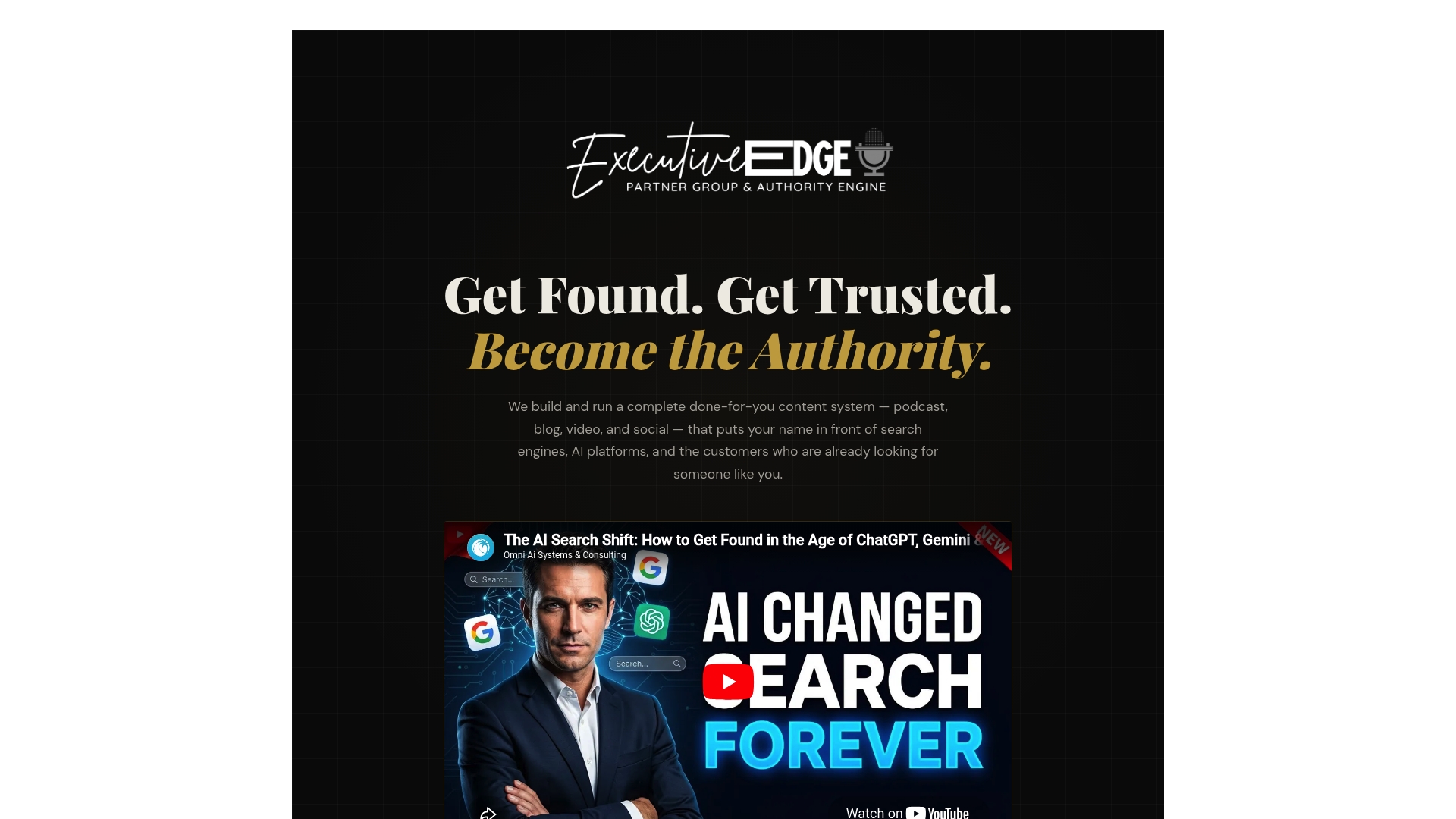
Executive Edge Partner Group's Authority Engine maps directly to the checklist above: structured onboarding, monthly executive interview, full audio and video production, short-form repurposing, GEO/AEO optimization, platform distribution, and a monthly analytics report with your account manager.
The model runs on a monthly retainer with clearly defined deliverables, no hidden fees, and full asset ownership transferred to you. Pricing is customized to your show format, repurposing volume, and distribution goals. Whether you are a consultant building a regional reputation or an executive positioning for a national audience, the system scales to match.
Request a discovery call or a sample episode to see the full deliverable set and get a custom pricing proposal.
Useful sources and further reading
The sources below back the claims in this article and offer practical next steps for executives evaluating a podcast-driven authority system:
- Why Brands Are Investing in Professional Podcast Production
- Authority Engine Executive Thought Leadership Content System
- How to Start a Podcast for Your CEO: The Ultimate Executive Production Guide
- Authority Signal™ | Done-for-You Executive Presence
- Thought Leadership Podcasts – Podcasting for Business
- How Podcast Hosting Builds Expertise for Professionals
- Thought Leader Podcast Strategy Best Practices 2026
- Turn Speaking Experience into Online Content That Lasts
FAQ
What is a done-for-you executive podcast system?
A done-for-you executive podcast system handles every step of podcast production and distribution on the executive's behalf, from recording and editing to repurposing and SEO optimization, so the executive's only job is showing up for the monthly interview.
How much does executive podcast production typically cost?
Market pricing ranges from roughly $450 per episode for per-episode models to $3,500–$5,000 per month for full-service retainer packages that include video, repurposing, and multi-platform distribution.
How long before a podcast builds measurable authority?
Most executives see early social impressions and download traction within 30–60 days; organic search traffic and inbound leads typically build over 90–180 days as the content library grows and search engines index the full asset set.
What KPIs should I track for executive brand building through podcasting?
Track episode downloads, short-form clip views, LinkedIn engagement, organic search visits to show pages, and the number of inbound consultations or meetings attributed to content — not just total download counts.
Does Executive Edge Partner Group offer a done-for-you podcast system?
Yes. The Executive Edge Authority Engine is a fully managed monthly retainer system covering podcast production, video, short-form repurposing, GEO/AEO optimization, and analytics reporting, with full asset ownership transferred to the client.