
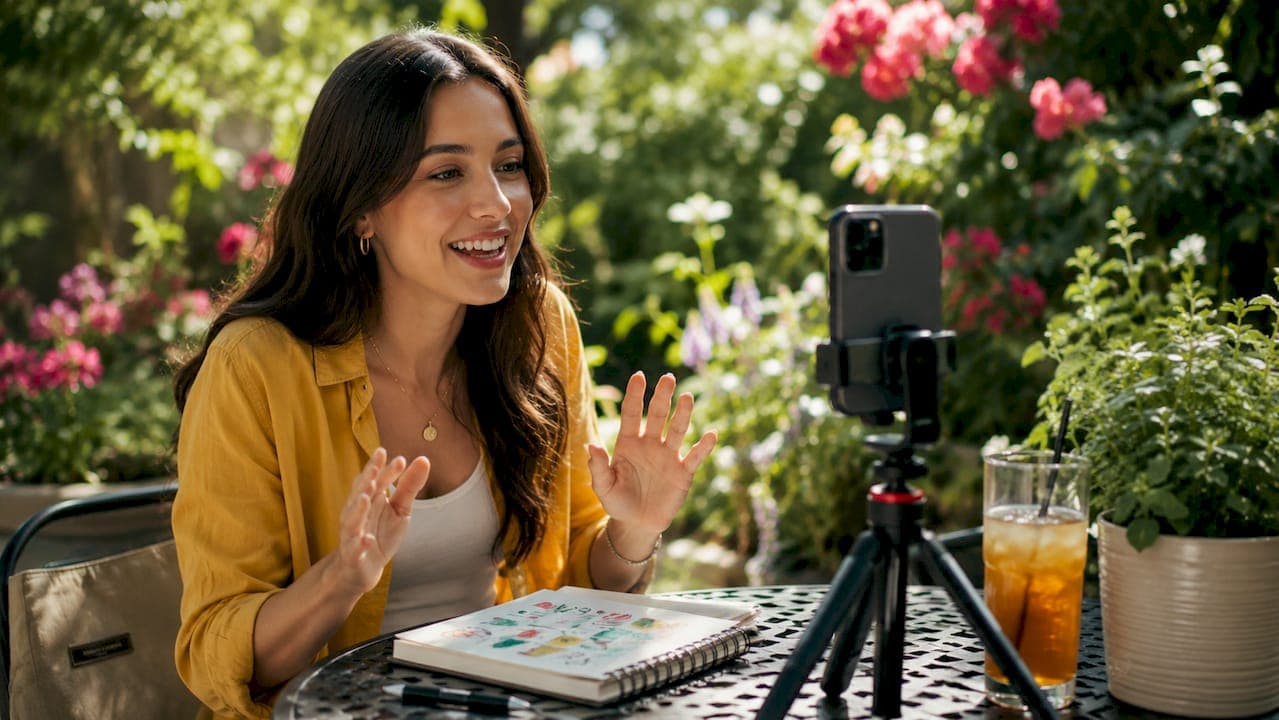
Local influencer content is brand-related material created by content creators whose audiences are geographically concentrated within a specific community, designed to drive local discovery and customer engagement. Unlike broad influencer marketing campaigns that chase national reach, this approach targets people who already live, work, and shop near your business. Tools like Meltwater and InfluencerDB help local marketers identify these creators by filtering for audience location rather than follower count alone. For business owners in Tyler and East Texas, understanding what is local influencer content means recognizing that a creator with 3,000 highly engaged local followers often delivers more measurable results than a celebrity with millions of scattered ones.
What is local influencer content and why does it work?
Local influencer content is defined as brand- or product-related content created by creators whose audiences are geographically concentrated, using location tags, neighborhood keywords, and community context to drive local discovery. The industry term for the broader practice is local influencer marketing, and this type of content sits at its core.

The reason it works comes down to trust. A creator who films inside your storefront, names your neighborhood on camera, and tags your address is producing searchable proof of your business's existence and quality. That proof lives on platforms like Instagram, TikTok, and YouTube, where local audiences actively search for recommendations.
Proximity matters more than polish here. A local food blogger reviewing a restaurant on Main Street carries more weight with nearby diners than a national food influencer who visited once. Community familiarity turns a recommendation into a trusted signal rather than a paid advertisement.
How does local influencer content differ from standard influencer marketing?
Standard influencer marketing prioritizes reach. Local influencer content prioritizes relevance. That distinction changes everything about how you select creators, write briefs, and measure results.
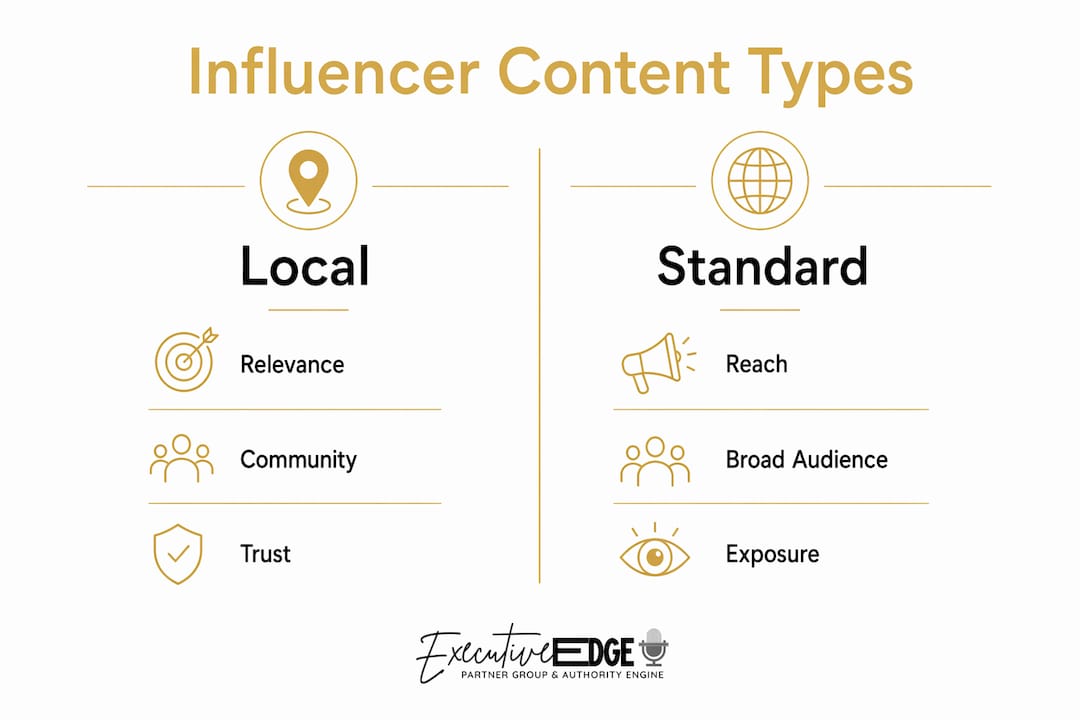
Nano-influencers, defined as creators with 1,000–10,000 followers, achieve engagement rates of 1.78% compared to 0.54% for micro-influencers and 0.33% for mega-influencers. Higher engagement means more comments, saves, and shares per post. For a local business, those interactions often come from people who can actually walk through your door.
The most effective local influencer content includes specific signals that make it discoverable and credible:
- Location tags tied to your business address
- Neighborhood or city name spoken on camera, not just typed in a caption
- Storefront or street sign shots that confirm the physical location
- Insider tips like parking details or best times to visit
- A clear "how to get there" moment that reduces friction for new customers
"Briefs should force local signals like city and neighborhood spoken on camera, location tags, and address context shots. Without those elements, the content functions as generic awareness rather than local discovery." — InfluencerDB
Pro Tip: Ask every creator to say your neighborhood name out loud in the first 10 seconds of their video. Platform algorithms and "near me" searches pick up spoken location cues, not just written tags.
FTC rules apply to all paid local influencer content. The FTC requires clear and conspicuous disclosure on every paid post, visible on mobile without requiring any clicks, using plain language like "Ad" or "Paid partnership." Compliance protects your brand and builds audience trust simultaneously.
How do you find and select the right local influencers?
Finding the right creator starts with one rule: audience location matters more than where the creator lives. A creator based in your city whose followers are spread across the country delivers almost no local value. You need verified audience concentration in your target area.
Step-by-step creator selection process
- Search by geography first. Use platforms like Meltwater or InfluencerDB with geographic filters to surface creators whose audiences are concentrated in your city or region.
- Verify audience location data. Request or review audience demographic reports. Look for a strong percentage of followers located within your target market.
- Audit engagement quality. Scroll through recent comments. Local engagement looks like specific references to the neighborhood, questions about hours, or tags of local friends.
- Screen for authenticity. Sudden follower spikes, low comment-to-like ratios, and generic comments ("Great post!") signal purchased followers. Avoid these creators entirely.
- Match the tier to your goal. Nano-influencers work best for conversion and community building. Micro-influencers add reach while maintaining solid engagement. Celebrities drive awareness but rarely convert at the local level.
Influencer tier comparison
| Tier | Follower range | Engagement rate | Best use case |
|---|---|---|---|
| Nano | 1,000–10,000 | 1.78% | Local conversion, foot traffic |
| Micro | 10,000–100,000 | 0.54% | Regional awareness + engagement |
| Macro/Mega | 100,000+ | 0.33% | Brand awareness at scale |
Smaller creators deliver more efficient engagement per dollar spent. For most local businesses, nano and micro tiers produce the strongest return on a limited budget.
How do you brief local influencers for maximum impact?
A strong brief does two things: it gives the creator enough local context to produce authentic content, and it builds in the tracking signals you need to measure results. Most local campaigns fail because the brief treats the creator like a national brand ambassador instead of a community guide.
Creator education on local specifics — from neighborhood details to parking instructions to store-level context — directly improves content authenticity. Without it, the content reads as generic and loses the trust signals that make local recommendations effective.
Every brief for a local influencer campaign should include:
- A measurable "find you" outcome. Define success as walk-ins, direction taps, phone calls, or bookings rather than impressions alone.
- Required local signals. Specify that the creator must say your city or neighborhood name on camera, tag your business address, and include a storefront shot.
- A "how to get there" moment. Including this element reduces audience skepticism and improves both engagement and platform algorithm discovery for "near me" searches.
- FTC disclosure language. Provide the exact wording you want the creator to use so there is no ambiguity.
- Attribution tools. Assign a UTM link for any web traffic, a unique promo code, or a geo-relevant call tracking number so you can tie content directly to business outcomes.
Pro Tip: Give every creator a one-page "local cheat sheet" covering your address, nearest cross street, parking options, and one insider tip about your business. Creators who know these details produce content that sounds like a genuine recommendation, not a sponsored read.
Repurposing local influencer content extends its value. Post creator videos to your own social channels, embed them in Google Business Profile updates, and use still frames in local ad campaigns. The video content produced by local creators often outperforms brand-produced video because it carries the creator's authentic voice.
What are the real benefits of local influencer content for small businesses?
Local influencer content produces results that standard digital advertising rarely matches at the same budget level. The benefits are specific and measurable when campaigns are set up correctly.
A local restaurant that partners with three nano-influencers in its city can generate dozens of tagged posts, hundreds of local story views, and a measurable uptick in direction requests within a single week. A home services company that briefs a local lifestyle creator to document a project can generate calls from neighbors who recognize the street. These are not hypothetical outcomes. They reflect what happens when audience location and content signals align.
The core benefits of local influencer content include:
- Higher engagement rates from audiences who can actually act on the recommendation
- Authentic local trust built through community familiarity rather than paid ad formats
- Stronger community ties as your brand becomes associated with creators your customers already follow
- Improved local search visibility through location-tagged content that feeds platform discovery algorithms
- Lower cost per conversion compared to macro-influencer campaigns or broad paid social
The most common pitfall is selecting creators based on follower count without verifying audience location. A creator with 50,000 followers spread across 40 states delivers almost no local value. Always confirm geographic concentration before signing any agreement. A second pitfall is skipping attribution setup. Without UTM links or call tracking, you cannot connect the content to actual business outcomes, and the campaign becomes impossible to evaluate or repeat.
Local content creation works best as a consistent local brand strategy rather than a one-off campaign. Businesses that run ongoing creator partnerships build compounding visibility over time.
Why I think most local businesses are leaving this opportunity on the table
Most local business owners I talk to have heard of influencer marketing, but they picture it as something for fashion brands or national companies with large budgets. That assumption costs them real customers every month.
The truth is that local influencer marketing is one of the most cost-efficient visibility tools available to small and mid-sized businesses right now. The creators who move the needle for a local business are not celebrities. They are the food blogger with 4,000 followers in your zip code, the fitness instructor whose audience is entirely local, or the neighborhood parent account that everyone in the community actually reads.
What I see fail most often is the brief. Business owners hand a creator their logo, a discount code, and a vague request to "post something." The creator produces generic content with no local signals, no location tag, and no "how to get there" moment. The post gets some likes and zero walk-ins. The business owner concludes that influencer marketing does not work. The real problem was the brief, not the channel.
The second mistake is treating every campaign as a one-time transaction. The local creators who deliver the best results are the ones who genuinely know your business. That takes time and relationship building. Invest in educating your creators about your neighborhood, your parking situation, your best-selling product, and the story behind your business. That education pays off in content that sounds real because it is real.
Reach versus engagement is a false choice at the local level. You do not need a creator with 100,000 followers. You need a creator whose 2,000 followers all live within five miles of your front door.
— David Domm
How Executive Edge Partner Group helps local businesses grow with influencer content
Local influencer marketing produces results when the strategy, creator selection, and measurement systems are built correctly from the start. Most local business owners do not have the time to manage all three.
Executive Edge Partner Group works with local businesses, service providers, and community brands to build authority-driven content systems that include local influencer outreach, creator briefing, and multi-platform distribution. The team handles creator identification, campaign setup, FTC compliance, and attribution tracking so you can focus on running your business. If you want to build consistent local visibility without becoming a full-time content creator, visit Executive Edge Partner Group to see how the system works for businesses like yours.
FAQ
What is local influencer content in simple terms?
Local influencer content is brand-related material created by social media creators whose followers are concentrated in a specific geographic area. Its purpose is to drive local discovery, foot traffic, and customer engagement for nearby businesses.
How do nano-influencers compare to mega-influencers for local campaigns?
Nano-influencers achieve engagement rates of 1.78% compared to 0.33% for mega-influencers, making them significantly more efficient for local conversion goals. Their smaller, tighter audiences are more likely to act on a recommendation from someone they trust.
Does audience location matter more than creator location?
Yes. A creator's home city is far less important than where their followers actually live. Brands should verify that a strong share of a creator's audience is concentrated in the target geographic market before partnering.
What disclosures are required for paid local influencer content?
The FTC requires clear and conspicuous disclosure on all paid influencer content, visible on mobile without requiring any clicks. Accepted language includes "Ad," "Sponsored," or "Paid partnership" placed prominently in the post.
How do you measure the results of a local influencer campaign?
Pair location-tagged creator content with trackable conversion paths such as UTM links, unique promo codes, or geo-relevant call tracking numbers. These tools connect content directly to walk-ins, calls, and bookings rather than relying on impressions alone.